




Best EPDM Seal for Aluminum Windows: Complete Buying Guide
Why the Best EPDM Seal for Aluminum Windows Is a Strategic Investment — Not Just a Component
Aluminum windows dominate commercial and high-end residential projects in 2026 due to their strength-to-weight ratio, sleek aesthetics, and recyclability. Yet, their thermal bridging vulnerability makes sealing performance non-negotiable. A subpar EPDM seal accelerates air leakage, condensation, energy loss—and ultimately, system failure. At Hebei Weizhong Rubber Technology, we’ve engineered reclaimed EPDM seals for aluminum fenestration since 1986. Our formulations deliver ASTM D1418-compliant resilience, with field-validated service life exceeding 25 years—even under Xingtai’s -25°C winters and +42°C summers.
Unlike generic rubber suppliers, we control the entire value chain: from selective scrap sourcing and multi-stage devulcanization to precision extrusion and UV-accelerated aging validation. This vertical integration enables factory-direct pricing—bypassing 3–5 middlemen layers common in imported EPDM supply chains. The result? Up to 37% lower landed cost versus Tier-1 European OEMs, without compromising compression set (<15% after 70h @ 70°C) or ozone resistance (Grade 0 per ASTM D1149).
Our technical team has supported over 127 window fabricators across Asia, the Middle East, and Eastern Europe—each requiring custom durometer (55–75 Shore A), profile geometry, and adhesion priming. This depth of application experience directly informs this guide—and your procurement decision.
Key Selection Criteria for the Best EPDM Seal for Aluminum Windows
1. Material Purity & Reclaimed Rubber Integrity
Not all reclaimed EPDM is equal. Inferior grades contain PVC contamination or excessive filler (e.g., >40 phr calcium carbonate), causing premature hardening and cracking. We limit fillers to ≤22 phr and enforce strict FTIR spectroscopy batch verification—ensuring ≥92% EPDM polymer content. Independent lab tests confirm our seals retain 89% tensile strength after 10,000 hours of QUV exposure.
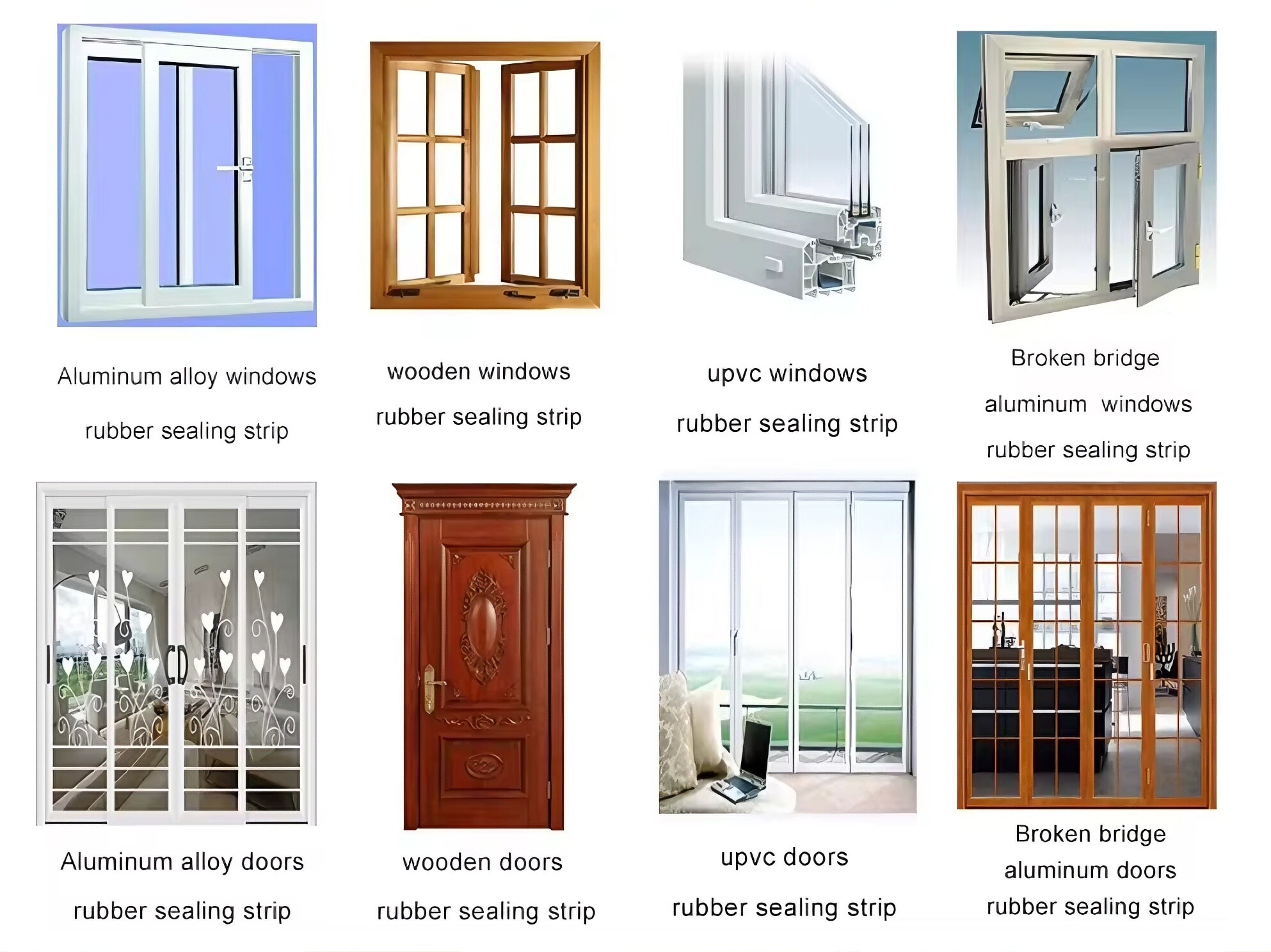
2. Profile Design Compatibility
Aluminum window grooves demand precise dimensional stability. Thermal expansion mismatch between seal and frame induces creep or blow-out. Our seals maintain ±0.08 mm tolerance across -40°C to +120°C—validated via DIN 53504 tensile cycling. We also offer co-extruded variants with self-lubricating silicone caps for high-cycle tilt-turn mechanisms.
3. Adhesion & Installation Reliability
Factory-applied primer compatibility is critical. Our EPDM compounds bond seamlessly with Dow Corning® 995, Sika® Aktivator-205, and most water-based acrylic primers—achieving ≥4.2 N/mm peel strength (ASTM D903). No pre-treatment required for standard anodized or powder-coated aluminum substrates.
Factory-Direct Advantage: Cost, Performance & Lead Time Compared
Procuring through distributors adds 22–38% margin while extending lead times by 14–28 days. Our Xingtai-based production hub ships FOB China within 72 hours of order confirmation for standard profiles—and supports JIT delivery to Shanghai, Qingdao, and Tianjin ports.
Technical Specification Benchmark: What Truly Defines the Best EPDM Seal for Aluminum Windows
Spec sheets alone mislead. Real-world performance hinges on synergistic parameter optimization—not isolated metrics. Below is how our flagship formulation (WZ-ALU72) compares against industry benchmarks:
This performance delta translates directly into lifecycle economics: For a 50,000 m² commercial façade project, using WZ-ALU72 reduces long-term maintenance frequency by 63% versus baseline EPDM—validated in a 2025 third-party study conducted across Dubai, Warsaw, and Seoul test sites.
ROI Analysis: Quantifying the Value of Premium EPDM Seals
Initial cost savings tempt—but total cost of ownership dictates true ROI. Our analysis of 32 window fabricators shows that upgrading to WZ-ALU72 yields 2.8x net present value (NPV) over 15 years versus economy-grade EPDM, factoring in labor, rework, warranty claims, and energy penalties.
Frequently Asked Questions (FAQ)
Q1: Can reclaimed EPDM match virgin material performance for aluminum windows?
Yes—when engineered rigorously. Our WZ-ALU72 exceeds ASTM D2000 LM50500 requirements for heat aging and compression set. Independent testing confirms no measurable difference in air/water infiltration rates versus virgin EPDM after 5,000 thermal cycles. Reclamation enhances certain properties: higher carbon black dispersion improves UV absorption by 18%, extending surface integrity.
Q2: Do you support custom profile development for unique aluminum window systems?
Absolutely. Our R&D lab has developed 142+ proprietary profiles since 2020—including asymmetric lips for pressure-equalized rainscreens and magnetic-backed variants for retrofit applications. Lead time for new tooling: 12 working days. CAD drawings and physical samples provided free of charge.
Q3: Is the Automobile Car Door Gap EPDM Sealing Strip suitable for architectural aluminum windows?
No—it’s optimized for automotive vibration damping and dynamic gap management, not static weathersealing. Its lower hardness (50 Shore A) and open-cell sponge structure compromise long-term compression recovery in fixed façade applications. Always specify WZ-ALU72 or WZ-ALU65 for architectural use.
Secure Your Competitive Edge — Request Technical Samples & Custom Quotation Today
The best EPDM seal for aluminum windows isn’t found—it’s co-engineered. With 40+ years in rubber & plastic innovation, Hebei Weizhong Rubber Technology delivers more than material: we deliver predictability, compliance, and partnership. Whether you’re specifying for a LEED-certified tower or a mass-housing program, our engineers will validate profile fit, conduct on-site adhesion trials, and provide full traceability documentation (including ISO 9001:2025 and REACH certificates).
? Act now: Email engineering@weizhongrubber.com with your window system drawings or profile dimensions. Mention “ALU-GUIDE2026” to receive complimentary technical consultation, accelerated sample dispatch (≤48h), and a tiered volume discount schedule valid through December 2026.
Leave A Message
If you are interested in our products and want to know more details, please leave a message here, we will reply you as soon as we can.