




In garage door seals wholesale, quality consistency directly affects safety performance, sealing reliability, and long-term customer satisfaction. For quality control and safety managers, understanding what influences material stability, production accuracy, and batch-to-batch performance is essential when evaluating suppliers. This article explores the key factors behind consistent garage door seal quality and how reliable rubber expertise can reduce risk, complaints, and replacement costs.
Why a checklist-based review is the safest way to assess quality consistency
For quality and safety teams, inconsistent garage door bottom seals or side seals are rarely caused by one single issue. In garage door seals wholesale, the most common failures come from a chain of small deviations: raw rubber variation, poor mixing control, dimensional drift, curing instability, or inadequate packaging during a 15 to 30 day delivery cycle.
A checklist approach helps buyers verify the right points in the right order. Instead of judging a supplier only by price, QC managers should review compound consistency, hardness range, tensile behavior, tolerance control, weather resistance expectations, and traceability between batches. This reduces the chance of approving material that performs well in one lot but fails in the next.
For safety managers, consistency matters because a seal that shrinks, hardens, cracks, or loses flexibility can create gaps of 2 mm to 8 mm over time. That can affect water resistance, dust exclusion, thermal buffering, and even the safe closing performance of certain garage door systems in cold or humid environments.
Priority review points before placing bulk orders
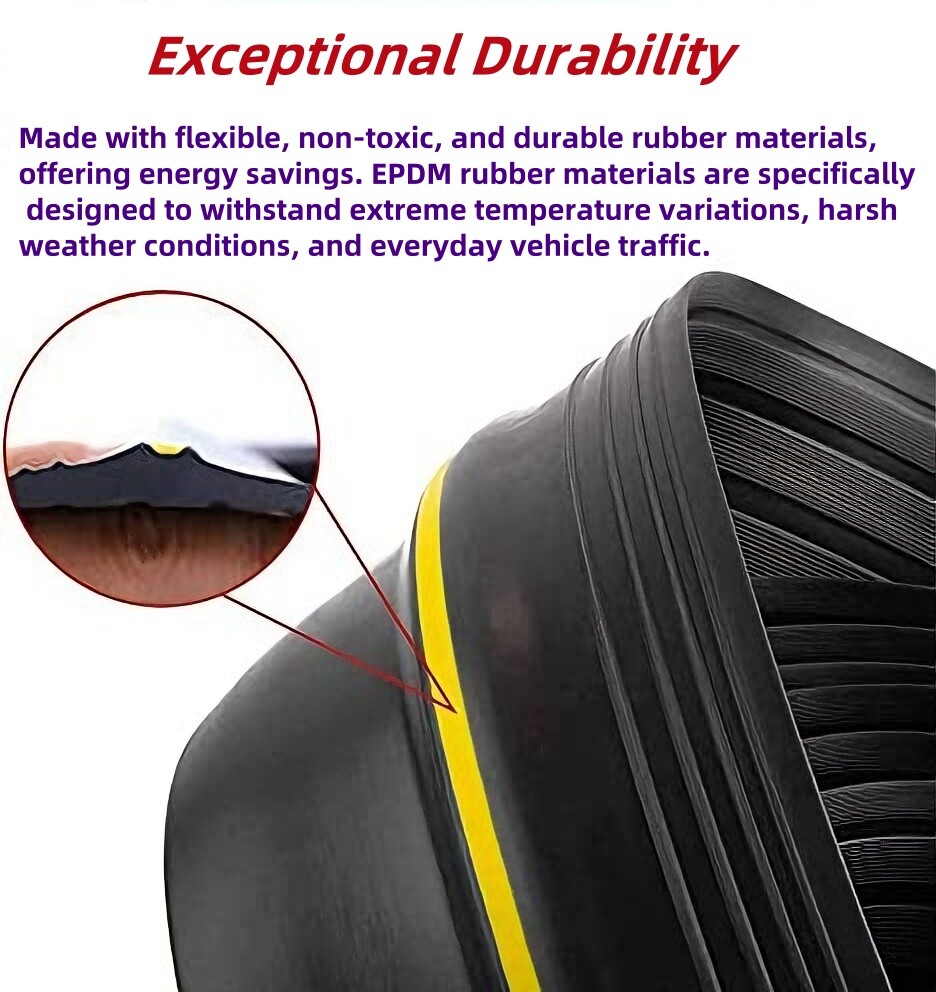
- Confirm the rubber base type, such as EPDM-focused formulations for outdoor weather exposure.
- Check whether batch records include hardness, density, and curing control data for each production lot.
- Verify dimensional tolerance requirements, especially for T-end, U-shape, and bulb profiles.
- Ask for sample retention and complaint response procedures for at least 6 to 12 months.
Core checklist: the material factors that affect garage door seals wholesale quality
Material formulation is the first checkpoint. In the rubber and plastics industry, garage door seals are often expected to handle UV exposure, ozone, moisture, and repeated compression. If the compound varies between batches, the seal may look identical at delivery but perform differently after 3 to 6 months of use.
For garage door seals wholesale, reclaimed rubber can be a practical and economical component when used with proper formulation control. The key is not whether reclaimed content exists, but whether the supplier can maintain stable physical properties, impurity control, and processing behavior. Experienced compound design is especially important when balancing cost and weather resistance.
Hebei Weizhong Rubber Technology has focused on EPDM reclaimed rubber since 1986, which is relevant for buyers seeking material consistency, predictable processing, and cost control in rubber seal applications. For QC teams, supplier experience in rubber R&D and production often has a direct effect on fewer batch deviations and better long-term supply reliability.
Material checklist for evaluation
- Hardness stability: a typical control range may be within ±3 Shore A for the same seal specification.
- Density consistency: variation should be monitored because it affects weight, compression feel, and extrusion stability.
- Elongation and tensile behavior: these indicate whether the seal can flex during installation without tearing.
- Low-temperature flexibility: important for climates that regularly drop below 0°C.
- Surface cleanliness and odor control: these can reveal poor raw material handling or contamination risk.
The following table can be used as a practical judgment standard when comparing suppliers in garage door seals wholesale.
This table shows why material review should go beyond basic appearance. Two black seals may look similar on arrival, but different compound control levels can lead to very different field performance after repeated compression cycles.
Production accuracy checklist: where batch-to-batch variation often starts
In garage door seals wholesale, stable production is just as important as stable raw materials. Extrusion temperature, die wear, line speed, cooling conditions, and curing time all affect the final profile. Even a dimensional drift of 1 mm to 2 mm can create installation issues in track-retained or threshold-contact designs.
QC managers should verify whether the supplier uses first-piece confirmation, in-process measurement, and final inspection by profile type. It is also important to know whether profile samples are checked every 30 minutes, every hour, or only at the beginning of production. More frequent inspection usually means better process discipline.
Cross-sector manufacturing experience can also reflect process capability. For example, precision extrusion discipline used in products like Silicone LED Strip Light often depends on similar control thinking: profile accuracy, material uniformity, and consistent surface finish. While the application is different, the quality mindset is relevant.
Production control points to verify
- Mixing control: ask whether each batch has a defined mixing time and discharge temperature range.
- Extrusion control: confirm profile measurement frequency and tolerance recording practice.
- Curing control: check whether under-curing or over-curing is monitored through routine physical tests.
- Packing control: confirm coil length, deformation prevention, and lot identification on cartons or pallets.
The table below helps buyers identify where process variation usually appears and what should be requested from the supplier.
If a supplier cannot clearly explain these controls, quality consistency in garage door seals wholesale may depend too much on operator experience rather than a repeatable system.
Application-specific checks that quality and safety managers should not skip
Not every garage door seal faces the same service conditions. Residential doors, warehouse doors, loading bays, and coastal installations all create different stresses. A seal used in a dry indoor area may not need the same ozone or temperature performance as one exposed to direct sunlight, rain, and daily vehicle movement.
For this reason, garage door seals wholesale decisions should include application mapping. Buyers should define operating temperature range, expected compression frequency, floor unevenness, and door profile compatibility before mass approval. A 5,000-meter order with unclear use conditions can create higher replacement costs than a smaller but better-matched order.
Safety managers should also review whether the seal design may affect entrapment sensitivity, closing resistance, or maintenance frequency. While seals are not the only safety component in a door system, they can influence how consistently the lower edge contacts the floor and how well the opening is protected from water, pests, and dust.
Commonly overlooked risk reminders
- Approving samples only by visual inspection, without checking compression feel or low-temperature flexibility.
- Ignoring packaging deformation during sea freight or long storage periods of 30 to 90 days.
- Using one specification across multiple door designs without verifying fit and contact pressure.
- Focusing on unit price while overlooking complaint handling cost, rework time, and replacement labor.
Execution guide: what to ask suppliers before final approval
A practical supplier review for garage door seals wholesale should end with documented questions, not assumptions. Ask for the material specification range, sample lead time, normal production lead time, lot identification method, and available customization options. If the supplier supports custom reclaimed rubber solutions, ask how formulation changes are managed and verified.
It is also useful to request a pilot order before annual purchasing. For example, running 1 to 3 trial batches can reveal whether the supplier maintains profile stability, packaging consistency, and communication discipline. This is often more informative than a single pre-production sample.
For buyers comparing long-term partners, consistency should be measured through fewer complaints, lower return frequency, and easier root-cause analysis when issues occur. In rubber-based products, the best wholesale choice is often the supplier that can explain process variables clearly, respond professionally, and adapt the compound to actual service conditions.
Why choose us / Contact us
If you are sourcing materials or evaluating suppliers for garage door seals wholesale, Hebei Weizhong Rubber Technology can support your team with practical discussion around EPDM reclaimed rubber stability, compound selection, cost-performance balance, and custom rubber solution planning. Our experience since 1986 helps buyers focus on the factors that most directly affect consistency in rubber seal production.
Contact us to discuss key points such as hardness targets, weather-resistance expectations, profile processing suitability, sample support, delivery cycle planning, and quotation details. If needed, we can also help you prepare a clearer technical checklist for supplier comparison so your quality and safety decisions are based on measurable criteria rather than price alone.
Leave A Message
If you are interested in our products and want to know more details, please leave a message here, we will reply you as soon as we can.