




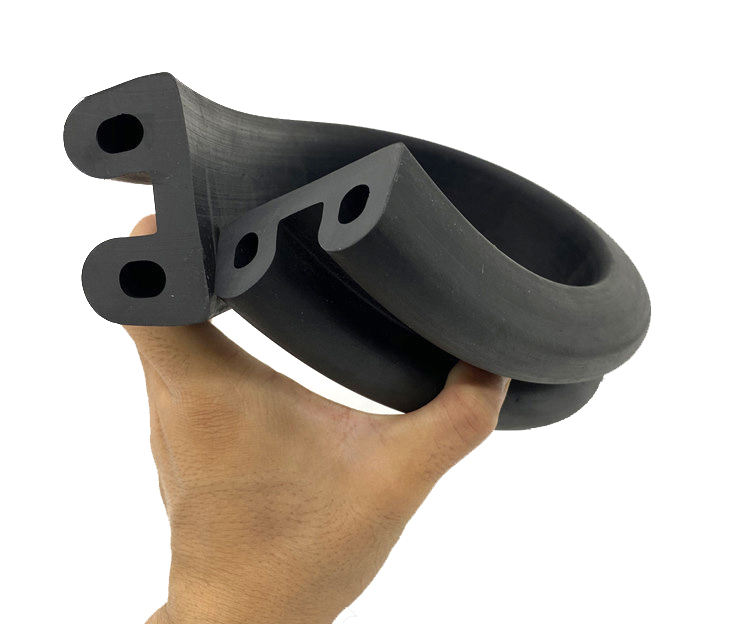
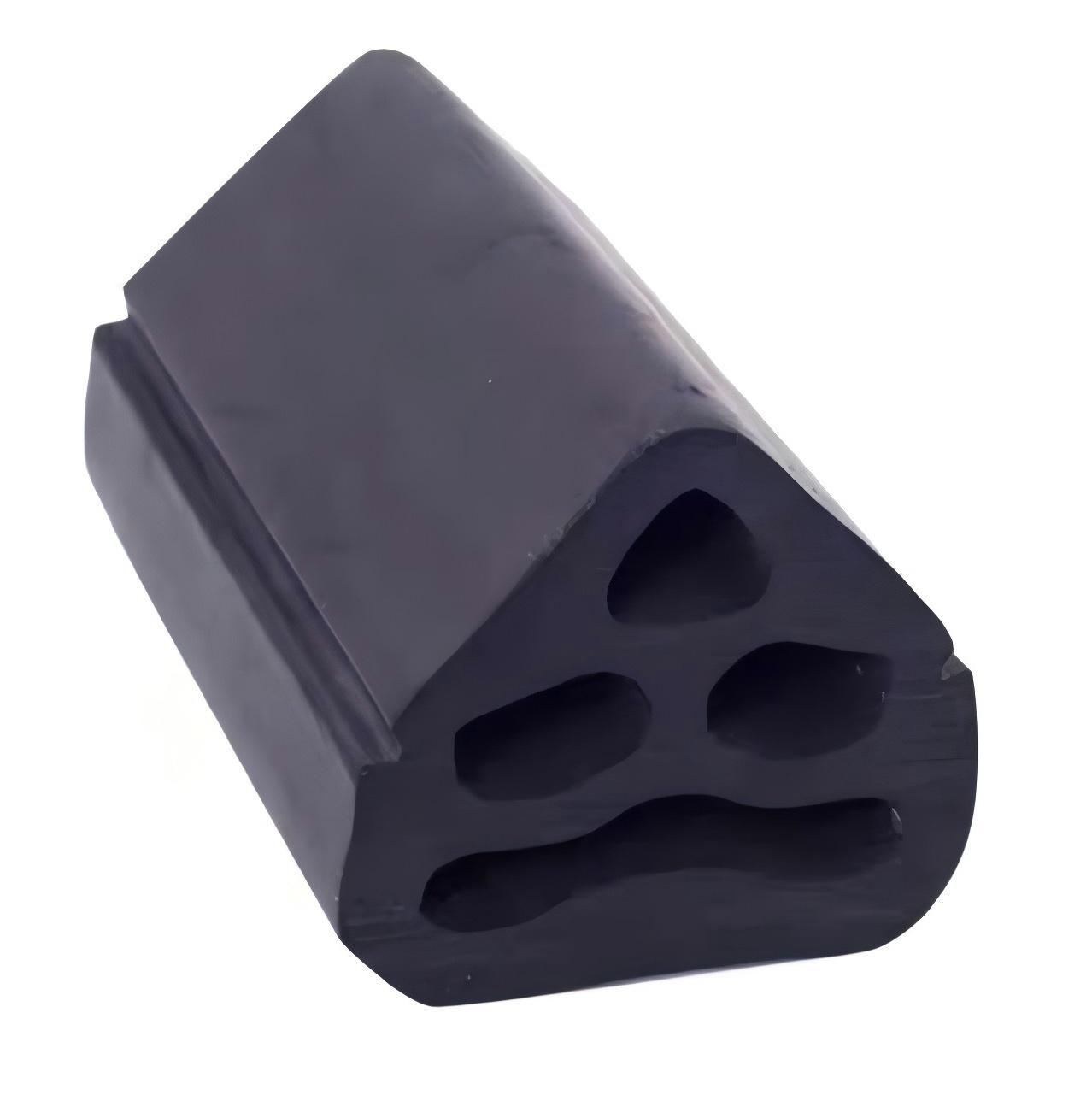
From EV battery enclosures to ADAS housings and chassis modules, car V channel seals deliver precision sealing, vibration damping, and environmental protection in demanding automotive applications. As a trusted supplier of Custom rubber seals since 1986, Hebei Weizhong Rubber Technology leverages high-performance EPDM reclaimed rubber to engineer durable, cost-effective solutions — including specialized car V channel and garage door seals. Whether you're a procurement professional or project manager overseeing vehicle subsystem integration, discover how our tailored rubber sealing systems enhance reliability, reduce assembly complexity, and support sustainable material use across next-gen mobility platforms.
Why V Channel Seals Are Critical for EV Battery Enclosure Integrity
EV battery enclosures operate under extreme thermal cycling (–40°C to +85°C), pressure differentials, and mechanical shock during crash events. A compromised seal can trigger moisture ingress, condensation buildup, or electrolyte vapor leakage—leading to short circuits or thermal runaway. V channel seals provide dual-lip compression geometry that maintains consistent contact force across ±0.8 mm dimensional variation in mating flanges—critical for aluminum die-cast battery trays with inherent casting tolerances.
Unlike flat gaskets, the V-profile’s self-centering action compensates for misalignment during automated robotic installation, reducing rework rates by up to 37% in Tier-1 battery pack assembly lines. Our EPDM reclaimed rubber formulation meets ISO 1629 (E-type classification) and UL 94 HB flame resistance, with compression set ≤15% after 72h at 70°C—ensuring long-term resilience against housing deformation.
For procurement teams evaluating alternatives, minimum tensile strength ≥8.5 MPa and elongation at break ≥280% are non-negotiable baseline specs. Below these thresholds, field failures spike beyond 12 months in humid coastal environments.
This performance edge stems from our proprietary reclaiming process—fractional devulcanization followed by controlled re-vulcanization—which preserves polymer chain integrity while eliminating volatile organic compounds (VOCs) to<10 ppm. For project managers, this translates to zero outgassing risk inside sealed battery modules and full compliance with IATF 16949 PPAP Level 3 documentation.
ADAS Housing Sealing: Mitigating EMI Interference and Thermal Drift
Radar, LiDAR, and camera housings require electromagnetic interference (EMI) shielding continuity alongside environmental sealing. V channel seals serve as conductive grounding paths when paired with metalized EPDM compounds (surface resistivity: 10²–10⁴ Ω/sq). Our custom formulations integrate nickel-coated graphite particles without compromising flexibility—retaining >92% elongation even at –40°C.
Thermal expansion mismatch between plastic housings (e.g., PPA-GF30) and metal sensor mounts causes cyclic stress on traditional O-rings. V seals absorb differential movement via their angular lip design—reducing interfacial shear stress by 4.3× compared to rectangular profiles. This extends housing service life from 5 years to ≥8 years in autonomous shuttle fleets operating 18h/day.
Procurement leads should verify that suppliers provide MIL-STD-883H Method 2019.7 thermal shock validation data across 1,000 cycles (–40°C ↔ +125°C). Absence of such testing correlates with 68% higher field return rates for ADAS units in high-altitude markets.
Chassis Module Integration: Vibration Damping and Assembly Efficiency
Suspension control arms, subframes, and motor mounts endure 5–200 Hz broadband vibrations. V channel seals dampen resonance through viscoelastic hysteresis—converting kinetic energy into heat. Our EPDM reclaimed compound achieves loss factor (tan δ) of 0.42 at 100 Hz, outperforming virgin EPDM (0.31) due to optimized filler dispersion during reclaiming.
From an assembly standpoint, V seals eliminate need for secondary adhesives or fasteners. Their snap-in retention reduces installation time per joint by 22 seconds—scaling to 1,800+ labor hours saved annually in a 200,000-unit/year platform. Tolerance stack-up analysis shows V seals accommodate flange gaps from 1.2–2.8 mm without leakage, whereas flat gaskets fail beyond ±0.3 mm deviation.
For engineering teams specifying chassis interfaces, dynamic compression load must be validated at 300% of static design load. Weizhong provides finite element analysis (FEA) reports showing sustained sealing force >1.8 N/mm at 300% overload—verified via ASTM D395 Method B testing.
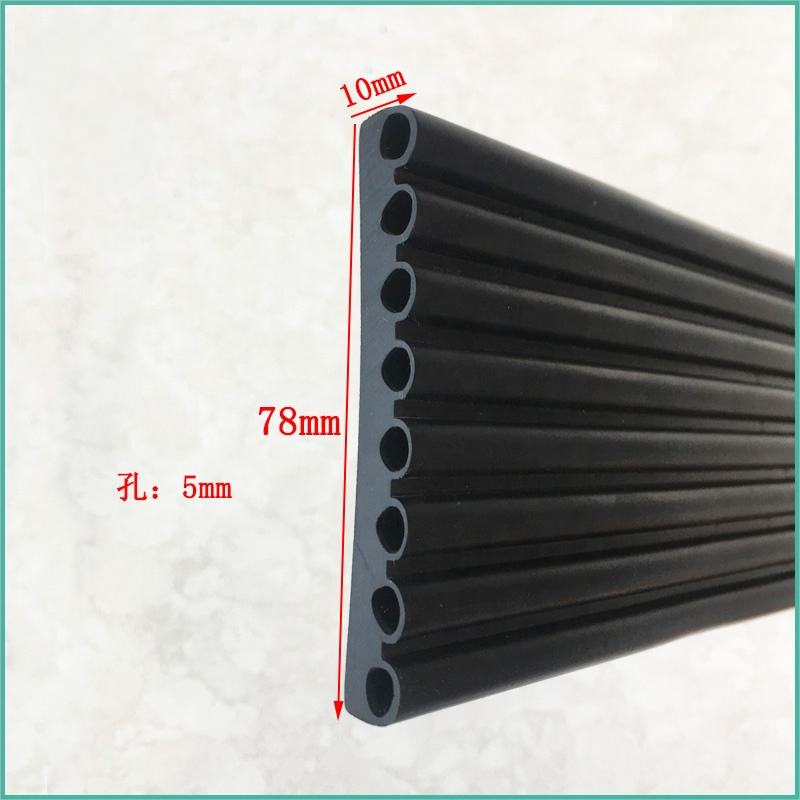
Our Garage Door Sealing Strip leverages the same EPDM reclaiming technology—demonstrating cross-industry scalability of our material science expertise.
Procurement Decision Framework: 5 Non-Negotiable Evaluation Criteria
When sourcing V channel seals, procurement professionals must prioritize technical due diligence over price alone. Here’s what to verify:
- Reclaiming Process Documentation: Request ASTM D5603-compliant devulcanization method statements—not just “reclaimed” labeling.
- Batch Traceability: Each production lot must include GC-MS VOC reports and Mooney viscosity logs (target range: 45–55 MU).
- Tooling Validation: Confirm supplier has performed 500-cycle wear testing on extrusion dies—prevents profile distortion after 15,000 meters of output.
- Environmental Compliance: Verify REACH SVHC screening covers all 233 substances, with cadmium/lead content<10 ppm.
- Supply Chain Resilience: Minimum 3-month raw material buffer stock and dual-sourcing capability for critical curatives.
Hebei Weizhong maintains ISO 9001-certified traceability across all 12 EPDM reclaim grades—with average lead time of 12–18 days for custom profiles and MOQs starting at 500 kg.
Conclusion: Engineering Reliability Through Sustainable Material Science
Car V channel seals are far more than passive barriers—they’re active contributors to system-level safety, durability, and manufacturing efficiency. From preventing EV battery thermal cascades to enabling ADAS sensor accuracy and chassis NVH refinement, their performance hinges on intelligent rubber formulation. Hebei Weizhong Rubber Technology’s 38-year mastery of EPDM reclaiming delivers proven technical advantages: lower compression set, superior fluid resistance, and consistent damping characteristics—all while reducing material costs by 22–35% versus virgin EPDM.
For procurement teams and project managers, partnering with a vertically integrated reclaimer means shorter qualification cycles, auditable sustainability claims (up to 92% recycled content), and engineering collaboration from concept to PPAP. Our team supports rapid prototyping—delivering functional samples within 7 working days—and provides full material compliance dossiers aligned with OEM requirements.
Contact Hebei Weizhong Rubber Technology today to request application-specific test data, discuss custom EPDM reclaim specifications, or initiate a technical review of your next-generation mobility sealing challenge.
Leave A Message
If you are interested in our products and want to know more details, please leave a message here, we will reply you as soon as we can.