




Container door seals play a critical role in protecting cargo, reducing moisture ingress, and lowering costly damage claims across global supply chains. For business decision-makers, choosing reliable sealing materials is not just a maintenance issue but a risk-control strategy. This article explores how high-performance rubber-based sealing solutions can improve container integrity, support operational efficiency, and deliver long-term value in demanding transport environments.
Why are Container door seals receiving more attention from business decision-makers?
For many logistics operators, fleet owners, container refurbishers, and cargo-related businesses, claims linked to water ingress, dust contamination, and temperature instability are no longer seen as isolated events. They are recurring operational costs. This is why Container door seals are moving from a low-visibility maintenance item to a board-level reliability concern. A damaged or poorly performing seal can allow rainwater, sea spray, humidity, and airborne contaminants to enter the container, affecting cargo value and customer trust at the same time.
The issue is especially important in sectors transporting packaged foods, industrial parts, textiles, electronics, chemicals, and moisture-sensitive goods. In these applications, the condition of Container door seals directly influences whether the container remains weather-tight throughout inland transport, port handling, and ocean shipment. A small sealing gap may seem minor during inspection, but over a long transit route it can become the root cause of product damage, mold growth, corroded packaging, or rejected deliveries.
From a financial perspective, the total cost of failure often exceeds the cost of replacement material. Decision-makers must consider claim processing time, cargo write-offs, customer dissatisfaction, reshipment, and reputational risk. That is why durable rubber sealing systems, supported by consistent material quality, have become a practical investment rather than a routine expense.
What exactly do Container door seals do, and how do they reduce cargo damage claims?
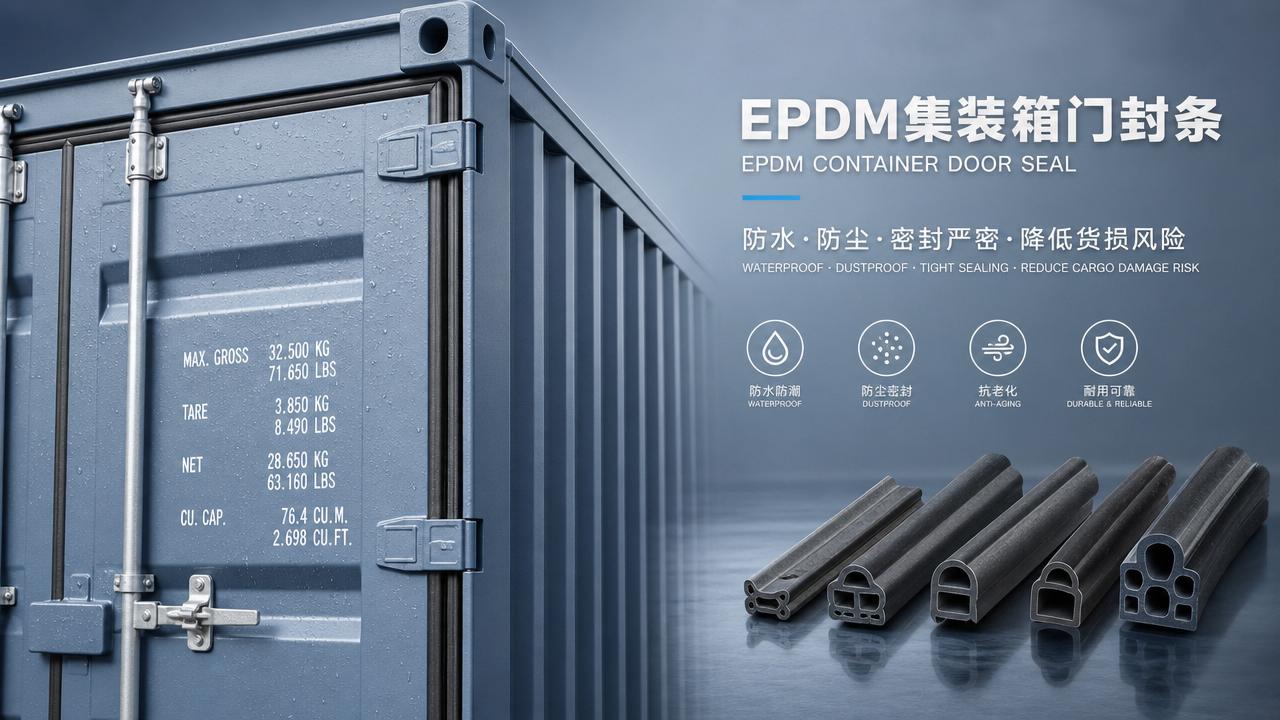
Container door seals are flexible rubber components installed around the door frame to create a tight barrier when container doors are closed and locked. Their main function is to compensate for metal tolerances, absorb vibration, and block the entry of water, air, dust, and external contaminants. When the seal is properly designed and made from stable rubber compounds, it maintains compression over time and continues to perform even after repeated opening, closing, and exposure to weather.
Their role in reducing cargo damage claims comes from prevention at the point of exposure. Most cargo losses associated with container leakage begin with one of four problems: aging rubber, poor resilience, cracking at low temperatures, or deformation after prolonged compression. High-quality Container door seals help prevent these issues by offering better elasticity, resistance to ozone and UV, and improved performance under changing temperatures.
In practice, effective seals support claims reduction in several ways:
- They reduce direct water ingress during heavy rain and marine exposure.
- They help limit humid air entry, which lowers condensation risk.
- They prevent dust contamination in dry or industrial transport routes.
- They improve door closure consistency, reducing maintenance-related failure points.
For companies handling high shipment volumes, even a modest reduction in leakage incidents can translate into measurable savings over a year.
Which material properties matter most when selecting Container door seals?
Business buyers often focus on price first, but material behavior is what determines long-term sealing performance. In the rubber and plastics industry, not all compounds offer the same balance between cost, resilience, and weather resistance. For Container door seals, one of the most valued material families is EPDM because of its excellent resistance to aging, ozone, sunlight, and moisture. These characteristics are highly relevant for containers exposed to ports, open yards, and global climate variations.
Key decision factors usually include compression set, tensile behavior, elongation, temperature adaptability, and consistency in batch production. If a seal loses its recovery force after compression, the contact pressure between the door and frame drops, increasing leakage risk. If the rubber becomes brittle in cold conditions or too soft in heat, performance can also deteriorate during long-distance transport cycles.
This is where material sourcing becomes strategic. A manufacturer with deep experience in EPDM reclaimed rubber development can help buyers balance economics and performance. Hebei Weizhong Rubber Technology, active since 1986, focuses on EPDM reclaimed rubber research, production, and sales, offering reliable and economical rubber materials for demanding applications. For buyers seeking custom reclaimed rubber solutions, this type of technical background can support more stable quality and better cost control across large-scale supply programs.
When evaluating Container door seals, ask suppliers not only what the product costs, but how the compound performs over time, in real outdoor conditions, and under repeated mechanical stress.
How can companies compare sealing options without relying only on supplier claims?
A structured comparison process helps procurement teams make better decisions. Instead of comparing quotations line by line, compare the total performance profile. This includes material formulation, production consistency, fit accuracy, expected service life, and support for application testing. The goal is to understand which sealing option will most effectively reduce cargo risk while remaining commercially practical.
The following table provides a useful evaluation framework for Container door seals:
This type of side-by-side comparison shifts the discussion from unit price to business outcome. In many cases, slightly better Container door seals lead to fewer service calls, lower replacement frequency, and fewer disputed claims.
What are the most common mistakes companies make when buying Container door seals?
A common mistake is treating all seals as interchangeable. In reality, profile design, rubber quality, and production discipline can vary significantly. Choosing a low-cost product without confirming material performance often creates hidden costs later. Another mistake is focusing only on initial hardness or appearance rather than long-term resilience. A seal may look acceptable on delivery but fail quickly under compression, weather exposure, or repeated handling.
Some companies also underestimate the value of reclaimed rubber expertise. High-quality reclaimed EPDM is not simply about using recycled content; it is about engineering a consistent, economical material that still meets application needs. Without proper formulation and process control, performance can be inconsistent. With experienced R&D and manufacturing capability, however, reclaimed rubber can support both cost efficiency and dependable product quality.
Another frequent error is replacing Container door seals only after obvious failure. By that point, the container may already have exposed cargo to moisture or contamination. Preventive inspection and replacement schedules are often more cost-effective than reactive maintenance, especially for businesses operating large fleets or serving quality-sensitive customers.
When is it worth upgrading rather than continuing with basic sealing materials?
Upgrading makes sense when cargo value is high, complaint rates are rising, climate exposure is severe, or maintenance intervals are creating uncertainty. If a company regularly ships goods through humid ports, rainy regions, or mixed-temperature routes, basic sealing materials may no longer provide enough protection. The same applies when containers are opened and closed frequently or when fleet age increases the need for more forgiving, resilient seals.
An upgrade is also justified when current products cause inconsistency in service performance. If some containers remain dry while others show repeated leakage, the problem may involve not only installation practice but also uneven rubber quality. Better Container door seals can create a more predictable maintenance standard across the fleet.
For procurement leaders, the right question is not “What is the cheapest seal?” but “What sealing option lowers the total probability and cost of cargo claims?” Once claim frequency, replacement cycles, and downtime are included, material upgrades often become easier to justify.
How should buyers assess suppliers of Container door seals and rubber materials?
Supplier assessment should go beyond catalog data. Buyers should look for manufacturing experience, raw material control, formulation expertise, and the ability to support customized requirements. In the rubber and plastics sector, process stability is essential because small variations in material composition can change final sealing behavior.
A practical supplier review usually includes the following questions:
- How long has the supplier worked with EPDM and reclaimed rubber technology?
- Can they provide custom compound recommendations based on use conditions?
- How do they control consistency between production batches?
- Do they understand transport, weather, and container maintenance realities?
- Can they support long-term supply reliability as purchasing volume grows?
Suppliers such as Hebei Weizhong Rubber Technology stand out when they combine long-term production experience with economical material solutions. For buyers needing durable Container door seals or related rubber compounds, a supplier with technical depth in EPDM reclaimed rubber may offer both commercial value and greater confidence in final application results.
What quick FAQ points should decision-makers review before placing an order?
Before purchasing Container door seals, many buyers benefit from a short decision checklist. The table below summarizes common questions and practical answers.
What should companies confirm next if they want a practical sealing solution?
If your business is evaluating Container door seals to reduce cargo damage claims, the next step is to define the real operating environment: shipment routes, cargo sensitivity, climate exposure, maintenance cycles, and replacement priorities. These factors determine whether a standard sealing option is sufficient or whether a more customized rubber solution is needed.
It is also wise to confirm material expectations early, including weather resistance, compression behavior, consistency, and target budget range. For companies seeking a balance between performance and cost, discussing custom EPDM reclaimed rubber options with an experienced supplier can be highly productive. Hebei Weizhong Rubber Technology has specialized in EPDM reclaimed rubber R&D, production, and sales since 1986, providing reliable and economical materials from Xingtai for customers who need professional, tailored rubber solutions.
If you need to move forward, the most useful first conversations usually cover profile requirements, application conditions, expected service life, testing standards, supply volume, lead time, and quotation structure. With the right technical discussion upfront, Container door seals can become a measurable asset in cargo protection, claim reduction, and long-term operational control.
https://www.instagram.com/reel/DRgir4ZkQi5/?igsh=MTVheXh5aXZwcGRpdA==
Leave A Message
If you are interested in our products and want to know more details, please leave a message here, we will reply you as soon as we can.