




For buyers and quality-focused teams comparing EPDM rubber strips price, the real cost difference between custom and standard options goes beyond the quote. From material consistency to sealing performance, every detail affects value. Backed by decades of rubber expertise, this guide helps you evaluate Mechanical seals price, supplier capability, and why working with a reliable Mechanical seals producer can reduce risk and improve long-term purchasing decisions.
Why EPDM Rubber Strips Price Is Never Just a Unit Price Question
In rubber and plastics procurement, EPDM rubber strips price is often discussed as if it were a simple per-meter or per-kilogram comparison. In practice, purchasing teams usually balance at least 4 core dimensions: raw material stability, dimensional tolerance, sealing function, and supply reliability. A lower quote may look attractive in month 1, but it can create higher replacement frequency, line stoppage risk, or incoming inspection failures within 3–6 months.
For quality control and safety management teams, EPDM strip selection directly affects weather resistance, ozone resistance, compression behavior, and fit consistency. Standard strips are suitable for many routine installations, especially when groove dimensions, hardness range, and operating environment are already defined. Custom strips become more valuable when projects involve unusual profiles, tighter tolerances such as ±0.3 mm to ±0.8 mm, or repeated exposure to outdoor aging, water, and temperature cycling.
The cost discussion becomes even more important when the strip is used in doors, windows, cabinets, enclosures, industrial housings, transport components, or sealing interfaces that must remain stable over long production cycles. In these applications, the right choice is not simply the cheapest option, but the one that produces the lowest total cost across procurement, installation, maintenance, and replacement intervals.
Hebei Weizhong Rubber Technology has focused on EPDM reclaimed rubber R&D, production, and sales since 1986. That long-term manufacturing experience matters for buyers because stable reclaimed rubber quality can help support more economical compounds while keeping performance targets practical and controllable. For B2B sourcing, this combination of cost awareness and material understanding is often more important than an aggressive initial quote.
What buyers usually include in real price evaluation
- Material formulation cost, including EPDM base, reclaimed rubber proportion, fillers, and additives selected for weathering or sealing needs.
- Processing complexity, such as custom die development, profile shape control, curing behavior, and tolerance verification in 2–4 production stages.
- Quality risk cost, including batch inconsistency, scrap rate, fit mismatch, and delayed approval from incoming inspection or site assembly teams.
- Service cost, such as sampling, technical confirmation, packaging protection, and delivery planning for small, medium, or large-volume orders.
Custom vs Standard: Which Option Delivers Better Purchasing Value?
Standard EPDM rubber strips are normally chosen when the application is mature, the section profile is conventional, and the buyer needs faster ordering with lower upfront tooling cost. Custom EPDM strips are usually preferred when sealing geometry is unique, assembly speed matters, or the buyer needs a better balance between compression set, hardness, and surface finish. The price gap often appears in tooling, minimum order quantity, setup time, and material tailoring rather than in rubber weight alone.
In a standard project, lead time can often be shorter because profile dies and process settings already exist. For many suppliers, this may reduce development work to 3 basic steps: sample confirmation, production scheduling, and delivery. A custom project may require 5 or 6 stages, including drawing review, compound confirmation, tool preparation, trial extrusion, sample adjustment, and final order release. That additional work explains why custom pricing is higher at the quotation stage.
However, procurement teams should not assume standard is always cheaper in the full project cycle. If a standard strip causes poor fit, weak rebound, or water leakage, the hidden cost quickly exceeds the savings. Rework on an installation line, especially across repeated batches or multiple sites, can be more expensive than paying for a custom section that installs correctly from the beginning.
For cross-category buyers comparing related sealing and profile materials, it is common to assess alternative edge protection or trim solutions alongside EPDM strips. In construction or precast support applications, products such as PVC Rounded Chamfer Strip may also enter the evaluation process, especially when the project involves non-rubber profile management and dimensional finishing requirements.
Direct comparison table for procurement teams
The table below helps buyers compare standard and custom EPDM rubber strips price from a total-value perspective rather than only an initial quotation perspective.
The key takeaway is simple: standard options reduce entry cost and time, while custom options often reduce downstream risk. Procurement should align the choice with expected annual volume, installation sensitivity, and failure cost rather than focusing on the quote alone.
A practical rule for decision-making
If the strip is used in a non-critical area and replacement is easy, standard products usually make sense. If the strip is installed in a hard-to-service assembly, exposed outdoor system, or safety-related enclosure, custom design often offers better long-term value. Buyers can use a 3-point filter: installation complexity, leakage risk, and replacement cost.
Which Technical Factors Change EPDM Rubber Strips Price the Most?
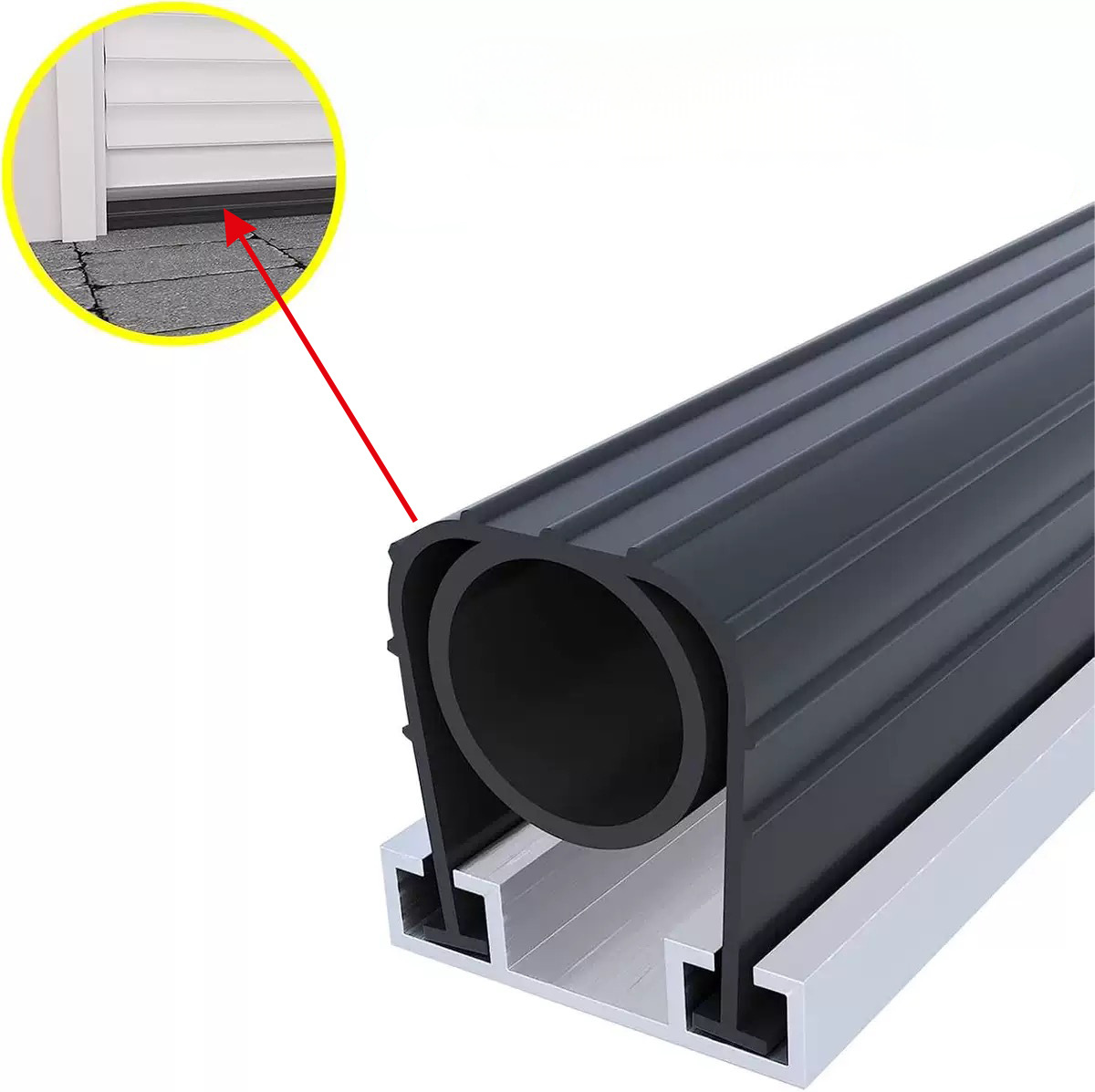
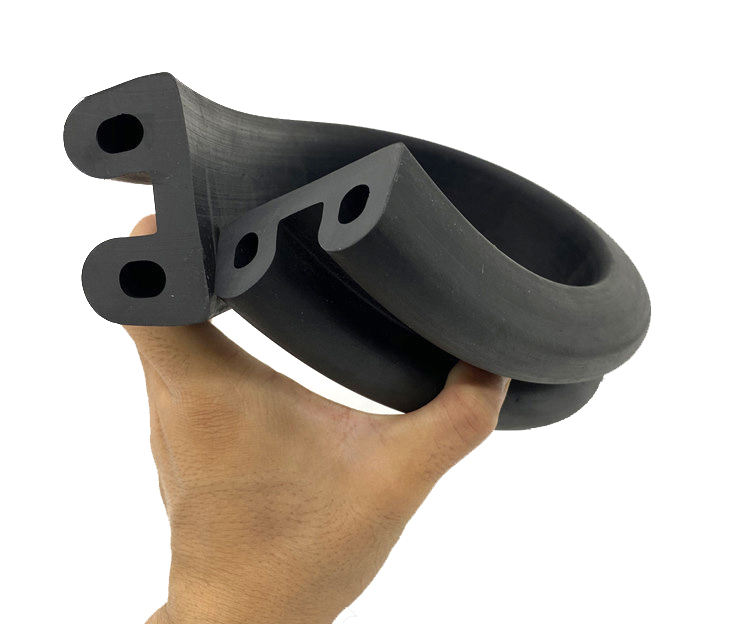
Material and process details strongly affect EPDM rubber strips price. The most common cost drivers include hardness target, density, tensile expectations, weather resistance, profile complexity, surface finish, and tolerance level. For example, a simple rectangular strip is much easier to produce than a hollow profile with multiple lips, corner transitions, or insert requirements. More complex geometry generally means stricter die control and a higher chance of dimensional variation during extrusion and curing.
For quality teams, hardness and compression behavior often deserve closer attention than price. A strip in the common hardness range of 50–80 Shore A may all look similar on paper, yet actual sealing behavior can differ depending on formulation and processing. If a lower-cost material loses elasticity too quickly or shows unstable rebound after repeated compression cycles, the visible savings disappear in service.
Environmental conditions also matter. EPDM is commonly selected for outdoor exposure, ozone resistance, and resistance to water and weathering. But procurement should still ask what the actual operating range is. A strip used indoors at moderate temperature is different from one used outdoors with seasonal swings, UV exposure, and repeated wet-dry cycles. The broader the performance target, the more important compound consistency becomes.
This is where an experienced rubber supplier creates value. Hebei Weizhong Rubber Technology combines decades of EPDM reclaimed rubber manufacturing experience with practical compound understanding. For buyers under budget pressure, that can support a more economical formulation path while maintaining suitability for the intended sealing function, instead of forcing a choice between low cost and uncontrolled risk.
Technical factors that should be confirmed before price comparison
- Profile dimensions and allowable tolerance, such as whether the section must stay within ±0.5 mm across continuous production.
- Hardness target and flexibility needs, especially for insertion force, rebound, and compression recovery.
- Surface requirements, including smoothness, marks, cutting quality, and appearance acceptance for exposed assemblies.
- Operating environment, such as indoor use, outdoor weathering, periodic water contact, or low-temperature exposure.
- Packaging and shipment method, especially for long strips that can deform if rolled or stacked improperly.
Parameter-oriented evaluation table
Before asking for final pricing, buyers can use the following parameter checklist to make supplier quotations more comparable and easier to audit internally.
When buyers compare offers using a unified parameter sheet, they reduce the risk of receiving quotations based on different assumptions. That makes supplier selection faster and improves communication between procurement, engineering, and QA teams.
How Procurement and QA Teams Should Evaluate Suppliers Before Ordering
A competitive EPDM rubber strips price is useful only when the supplier can support stable delivery and consistent batches. For purchasing teams, supplier evaluation should move beyond the quotation sheet to cover process capability, communication efficiency, and problem response. For QA and safety management teams, the key concern is whether the supplier can repeatedly deliver material that matches the approved sample over multiple production lots.
A practical evaluation approach is to use 5 checks before placing a mass order. First, confirm whether the supplier understands your operating environment. Second, verify whether dimensions and hardness are discussed in measurable terms. Third, request a sample review cycle. Fourth, clarify packaging and shipment method. Fifth, ask how the supplier handles batch variation and corrective feedback. These five checks can save considerable time in later dispute handling.
Hebei Weizhong Rubber Technology brings an advantage that many price-only traders cannot provide: long-term manufacturing specialization in EPDM reclaimed rubber. For buyers managing cost pressure, this matters because formulation knowledge helps make realistic recommendations rather than pushing unsuitable material or over-specifying the compound. The result is a sourcing process that is more aligned with actual use, not just a faster quote response.
In some projects, buyers also compare EPDM strips with neighboring material categories used in structural finishing or profile edge applications. If the scope includes sealing plus form-shaping accessories, a product such as PVC Rounded Chamfer Strip may appear in the broader bill of materials. The key is to keep each material assessed by its actual function rather than by appearance alone.
A practical supplier review checklist
- Define the use condition clearly: sealing, cushioning, weather exposure, compression frequency, and expected service cycle.
- Provide drawings or section samples, especially for custom profiles or groove-fit applications.
- Ask for a sample approval route, typically sample review, performance check, and installation test in 3 stages.
- Confirm supply rhythm, such as one-time order, monthly replenishment, or quarterly forecast planning.
- Clarify what happens if hardness, size, or appearance differs from approved criteria on delivery.
What quality teams should ask specifically
Quality personnel should request consistent communication on tolerance, appearance standards, and packaging method. They should also separate critical and non-critical defects. For example, a minor surface mark may be acceptable for hidden installation, while profile deformation or cross-section inconsistency may not. This distinction helps avoid unnecessary rejection while protecting real performance requirements.
Common Cost Mistakes, Compliance Concerns, and FAQ for Decision Makers
One common mistake is assuming that all EPDM strips with a similar appearance have similar service life. Another is focusing on the lowest quote without checking whether the material and profile are truly suitable for the use condition. A third mistake is ignoring approval time. In many factories, a delayed sample confirmation can shift purchasing by 7–10 days, which can be more damaging than a small price difference on paper.
Compliance should be handled with the same practical mindset. If your project requires material documentation, environmental declarations, or internal supplier approval records, those items should be listed before quotation finalization. Buyers should avoid vague statements and instead define the documents needed for review. In rubber and plastics procurement, clarity at the start often prevents disagreement after delivery.
For industrial buyers, it is also useful to map the order process into 4 phases: requirement confirmation, sample validation, price and lead-time approval, and mass production release. This simple structure supports both procurement and QA. It creates a shared checklist and reduces risk when multiple departments participate in the final decision.
Below are the most relevant questions frequently raised when teams compare custom and standard EPDM rubber strips price in real sourcing situations.
How do I know whether standard EPDM strips are enough for my project?
If your application uses a common section, easy installation access, and moderate environmental exposure, standard strips are often enough. This is especially true for replacement orders where dimensions are already proven. However, if your assembly has repeated leakage, poor corner fit, or compression instability, a custom profile is usually worth evaluating. A short trial with 2–3 sample variants can often reveal the better route.
What should procurement ask for before comparing quotations?
Ask for at least 5 items: profile drawing or sample basis, hardness range, dimensional tolerance, packaging method, and expected lead time. If the application is outdoors or quality-sensitive, also ask how the compound is positioned for weather resistance and batch consistency. Quotations without these details are difficult to compare fairly.
Does custom always mean a high minimum order quantity?
Not always. Minimum order quantity depends on profile complexity, tool setup, and supplier production planning. Some custom projects can start with small trial quantities for validation, followed by larger releases after approval. Buyers should discuss phased ordering, especially when moving from sample to pilot to monthly supply.
How long does approval usually take?
For standard items, sample and order confirmation may move relatively quickly if dimensions are clear. For custom items, a realistic cycle often includes 2–4 weeks for drawing review, trial production, sample evaluation, and final adjustments. Internal approval speed on the buyer side can also affect the total schedule, so procurement should coordinate QA and engineering early.
Why Work With Hebei Weizhong Rubber Technology for Better Cost Control and Lower Supply Risk
For companies sourcing in the rubber and plastics sector, the best supplier is rarely the one that simply offers the lowest EPDM rubber strips price. The better choice is the supplier that understands how formulation, reclaimed rubber application, process consistency, and delivery planning affect your total purchasing result. Hebei Weizhong Rubber Technology has been engaged in EPDM reclaimed rubber R&D, production, and sales since 1986, giving buyers access to practical material knowledge built over decades.
That experience is especially useful for procurement managers seeking a balance between performance and budget. Instead of treating every order as a generic commodity, the company can support discussions around custom reclaimed rubber solutions, application fit, and economical formulation direction. This is valuable when projects face tight budgets, short replenishment windows, or repeated quality disputes with less specialized suppliers.
For QA and safety teams, working with a technically grounded supplier can simplify communication on tolerance, appearance expectations, and application suitability. It also helps when the project needs sample support, profile review, or clearer alignment between engineering and purchasing requirements. In many cases, these service details are what reduce ordering risk more effectively than a small price concession.
If you are comparing custom and standard EPDM rubber strips, now is the right time to discuss the specific details that actually shape cost: profile dimensions, hardness target, service environment, order volume, sample timing, and packaging needs. Contact Hebei Weizhong Rubber Technology to consult on parameter confirmation, product selection, delivery cycle planning, custom reclaimed rubber solutions, sample support, and quotation communication based on your real application instead of guesswork.
Leave A Message
If you are interested in our products and want to know more details, please leave a message here, we will reply you as soon as we can.