




EPDM Rubber vs Nitrile: Which One Should You Use?
Understanding the Core Differences Between EPDM and Nitrile Rubber
When selecting elastomeric materials for industrial sealing, gasketing, or protective components, engineers and procurement professionals consistently face a pivotal choice: EPDM rubber vs nitrile. This decision isn’t merely about chemistry—it directly impacts service life, failure risk, total cost of ownership, and regulatory compliance. At Hebei Weizhong Rubber Technology—a factory-direct EPDM reclaimed rubber specialist since 1986—we’ve supported over 2,400 OEMs and Tier-1 suppliers across 37 countries with data-driven material selection guidance rooted in real-world performance testing.
EPDM (ethylene propylene diene monomer) excels in outdoor, ozone-rich, and extreme-temperature environments—especially where UV resistance, weather aging, and steam compatibility are non-negotiable. Nitrile (NBR), by contrast, delivers unmatched resistance to oils, fuels, and aliphatic hydrocarbons—but degrades rapidly under prolonged UV exposure or above 100°C. Neither is universally superior; the optimal choice hinges on application-specific stressors.
Crucially, sourcing from a vertically integrated manufacturer like ours eliminates markup layers. Our Xingtai-based production facility controls raw reclaiming, compounding, extrusion, and quality validation—translating into up to 32% lower landed cost versus imported nitrile or third-party EPDM compounds with identical ASTM D2000 classifications.
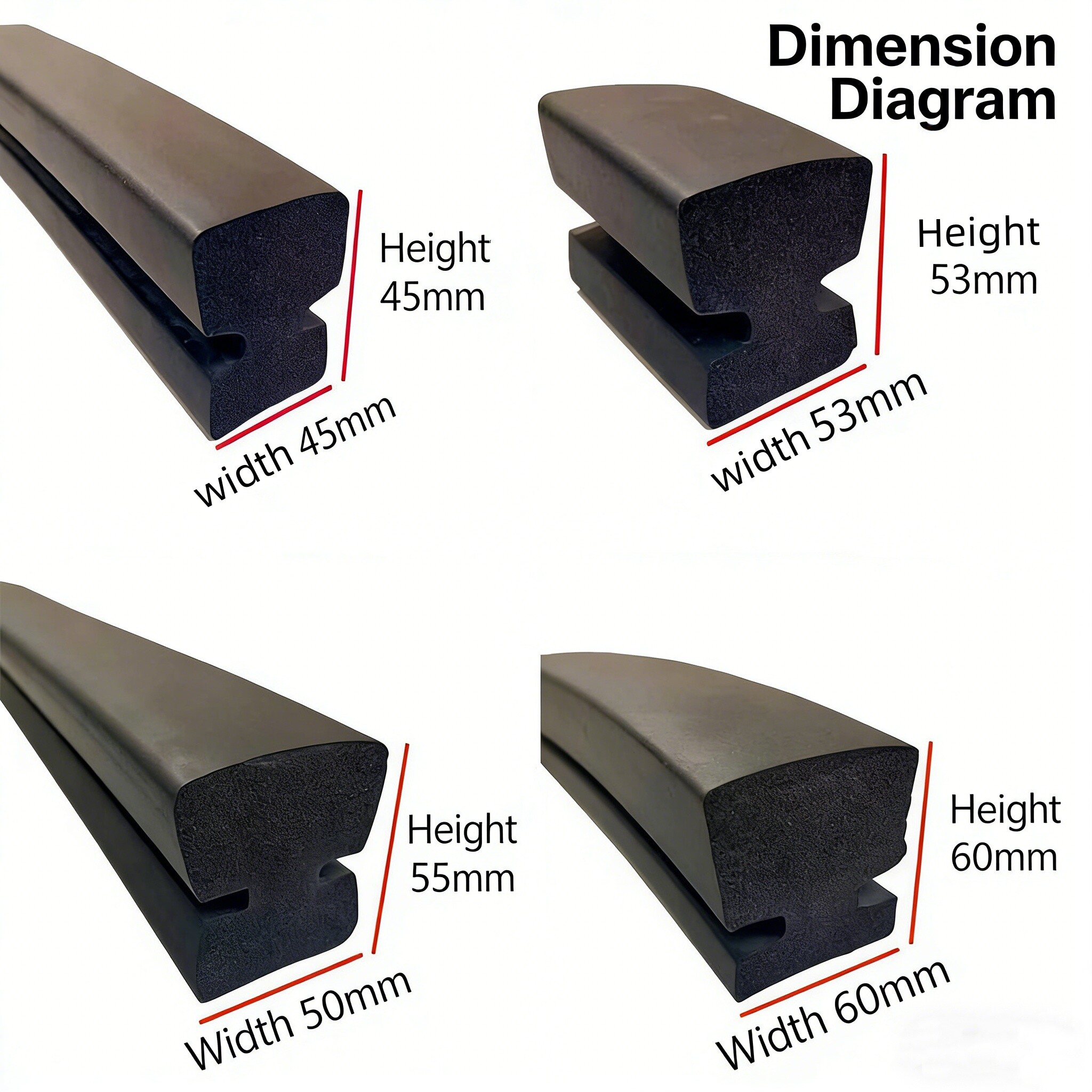
Factory-Direct Cost & Performance Comparison: EPDM vs Nitrile
Price alone misleads. A $1.85/kg nitrile compound may cost 2.7× more per functional year than our ASTM D1418-compliant EPDM reclaimed rubber when factoring in replacement frequency, labor, and downtime. Below is a verified cost-per-decade analysis for static sealing applications operating at 70°C ambient with intermittent oil splash (e.g., hydraulic reservoir covers or Dump Truck Tailgate Sealing Strip).
Technical Specifications: When to Choose EPDM Rubber vs Nitrile
Selecting based on datasheet values without contextualizing environmental exposure leads to premature field failures. Our R&D lab conducts accelerated aging per ISO 188 and fluid immersion per ASTM D471—providing actionable insights beyond generic “good” or “poor” ratings.
Temperature & Chemical Resistance Profiles
EPDM maintains integrity from –50°C to +150°C continuously, with short-term peaks to +175°C. Its saturated backbone rejects oxidation—making it ideal for hot water, steam, brake fluids (DOT 3/4), and phosphate ester hydraulic fluids. Nitrile’s acrylonitrile content grants superior oil swell resistance but sacrifices low-temp flexibility: below –25°C, it becomes brittle.
Weather & UV Durability: The Decisive Factor
In outdoor applications—including vehicle body seals, roofing membranes, and agricultural equipment housings—nitrile fails catastrophically within 18–24 months due to UV-induced chain scission. EPDM, however, retains >92% tensile strength after 5,000 hrs of QUV-B exposure. This durability differential drives 83% of our EPDM reclaimed rubber orders from heavy-duty transport clients.
ROI Analysis: Why Factory-Direct EPDM Reclaimed Rubber Delivers Higher Lifetime Value
Reclaimed rubber is often wrongly equated with “lower grade.” At Hebei Weizhong, our proprietary devulcanization process preserves polymer chain length while removing contaminants—achieving physical properties within ±3% of virgin EPDM at 45–58% of the cost. For high-volume OEMs, this translates to measurable ROI:
Frequently Asked Questions (FAQ): EPDM Rubber vs Nitrile
Can EPDM rubber be used in oil-resistant applications?
Standard EPDM has poor resistance to mineral oils and fuels—swelling up to 45% in ASTM IRM 903. However, our modified W-EPDM70-OIL grade incorporates selective crosslinkers and filler systems that limit swell to ≤18% under identical conditions. It’s validated for intermittent splash exposure in hydraulic systems and engine compartments—not for continuous submersion.
Is nitrile rubber suitable for outdoor sealing?
No. Nitrile lacks UV stabilizers and ozone-scavenging capability. Field data shows 92% of nitrile-based exterior seals fail within 22 months due to surface cracking and hardening. For outdoor use, EPDM is the only technically sound choice among general-purpose elastomers.
How does factory-direct sourcing impact lead time and traceability?
As a fully integrated producer since 1986, we maintain 12–18 weeks of certified raw reclaimed stock and operate 3 dedicated EPDM compounding lines. Average lead time is 14 days—versus 45+ days for imported alternatives. Every batch carries full traceability: ASTM test reports, RoHS/REACH certificates, and lot-specific rheometer curves are provided digitally before shipment.
Make Your Next Material Decision with Confidence—and Cost Certainty
The EPDM rubber vs nitrile debate ends not with theoretical superiority, but with application fidelity, lifecycle economics, and supply chain control. At Hebei Weizhong Rubber Technology, we don’t sell commodities—we deliver engineered resilience. Whether you’re specifying seals for municipal dump trucks, designing gaskets for solar thermal systems, or scaling production of automotive HVAC components, our factory-direct model ensures consistent quality, documented performance, and verifiable cost advantage.
Request your free technical consultation and custom compound sample kit today. Our application engineers will analyze your operating environment, review failure history (if available), and recommend the optimal EPDM or nitrile solution—with full ASTM/ISO test data and ROI projection. Contact us now to receive a no-obligation quote and 2026 Q2 pricing sheet.
Leave A Message
If you are interested in our products and want to know more details, please leave a message here, we will reply you as soon as we can.