




Vinyl garage door seals can cost less to buy, but EPDM can cost less to keep in service when exposure to sunlight, ozone, cold, or repeated compression drives replacement. The deciding factor is not the material price alone: it is the installed cost divided by the period during which the seal maintains an acceptable barrier.
A lower-priced vinyl seal is a reasonable choice for a sheltered door with modest operating demands and inexpensive replacement labor. A higher-priced EPDM seal becomes more attractive when premature hardening, cracking, or loss of recovery would trigger repeat service visits. Neither material offers a guaranteed replacement interval simply because its name appears on a specification sheet.
Compare the same seal before comparing the price
“Garage door seal” can mean a bottom insert, perimeter weatherstrip, or floor-mounted threshold. These products have different installation requirements and failure modes. A meaningful vinyl-versus-EPDM comparison should hold the application, profile dimensions, and required sealing performance constant.
For a bottom insert, the retaining geometry is critical. T-end width, bead diameter, channel spacing, wall thickness, and the compressed profile determine whether the strip fits and seals correctly. When comparing Garage Door Bottom Sealing Strips, an apparently cheaper quotation may cover a lighter section, a different attachment profile, or a shorter usable length.
Compare delivered cost per usable door set, rather than price per kilogram alone. Rubber and plastic compounds have different densities, while hollow profiles use different amounts of material. A low price by weight does not necessarily produce a low price per installed door.
Replacement frequency is an application result, not a material rating
A universal claim such as “vinyl lasts three years and EPDM lasts ten” is not a sound purchasing basis. Exposure, door alignment, floor condition, operating cycles, and compound quality can change the outcome substantially. Calendar age alone also misses the difference between a seal that remains intact and one that still closes gaps effectively.
Flexible vinyl relies on its formulation to maintain flexibility. Plasticizer loss or migration can contribute to hardening, while low temperatures can reduce conformability. EPDM’s polymer structure gives it strong ozone and weathering resistance, but excessive filler, unsuitable curing, or poor processing can undermine the finished seal’s mechanical performance.
For bottom seals, abrasion and tearing may outweigh weathering. A rough floor, debris, frozen contact surface, or damaged retainer can shorten the life of either material. EPDM is not a remedy for a door that drags its seal across concrete or closes with excessive compression.
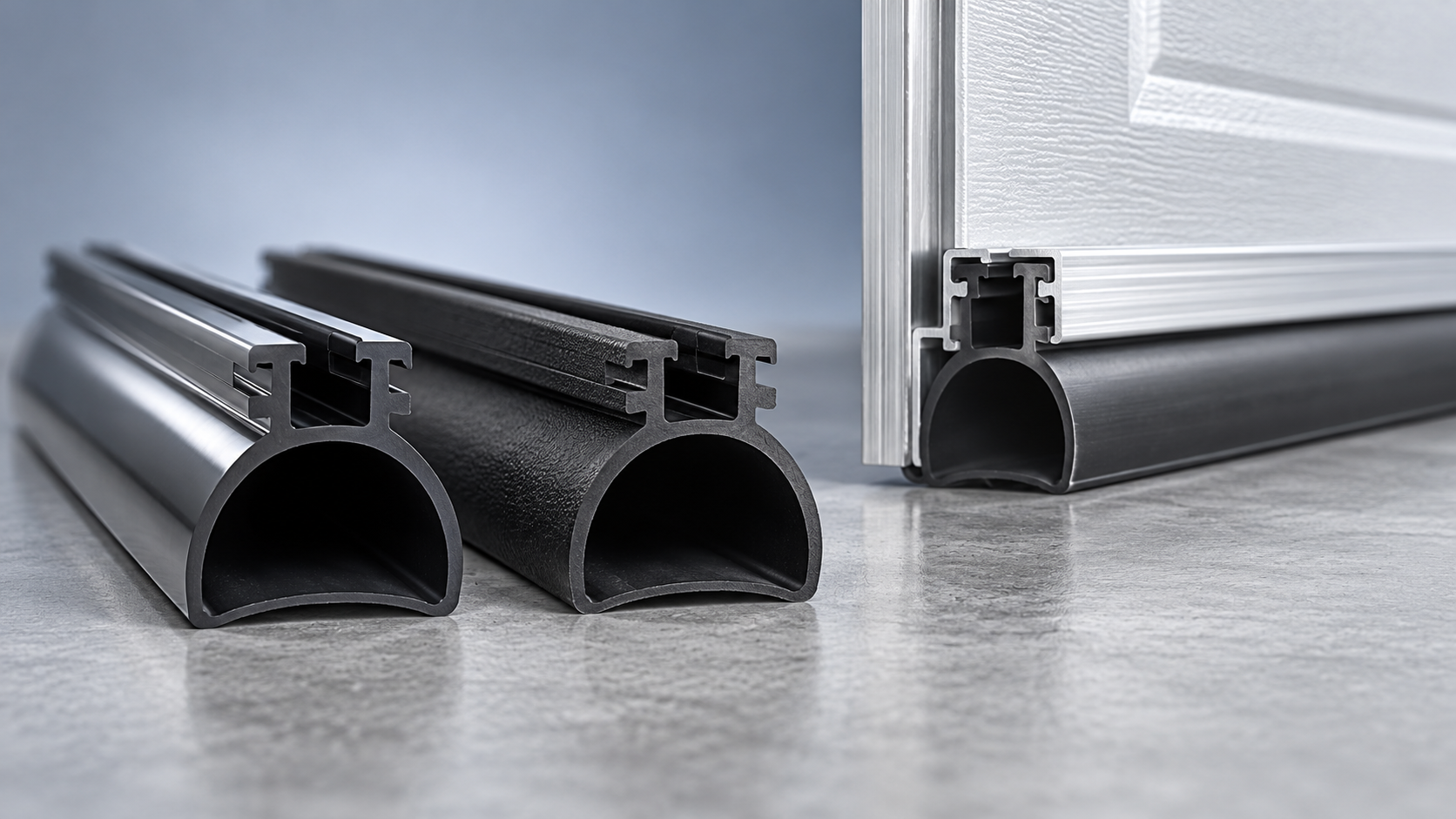
Replacement criteria should therefore describe functional failure: persistent gaps, split attachment edges, cracks that open under flexing, or failure to recover after compression. Cosmetic discoloration alone need not justify replacement. Conversely, a strip can look serviceable while remaining flattened enough to admit water or air.
Put the premium against the cost of another replacement
The useful comparison is the cost of maintaining an acceptable seal over a defined period. Include the delivered strip price, installation labor, service travel, and disposal. Add downtime or callout costs only where they genuinely occur; do not inflate the calculation with unsupported savings.
The following example uses hypothetical figures, not market quotations or predicted service lives. Assume both alternatives fit the same door and deliver equivalent sealing performance while in service.
Under these assumptions, the EPDM option has a higher strip price but a lower annualized installed cost. Its break-even service interval is 3.9 years: $78 divided by the vinyl option’s $20 annual cost. It does not need to last twice as long to justify the premium.
This simple comparison excludes discounting, price changes, and residual value. More importantly, the assumed intervals require evidence. If both seals last three years, vinyl is cheaper under the same cost assumptions. If replacement labor is expensive or requires a separate site visit, extending service life becomes more valuable.
Separate scheduled replacement from emergency replacement when reviewing maintenance records. A seal changed during an existing service visit carries a different incremental cost from one requiring a dedicated callout. Combining those events into one average can distort the material decision.
Where reclaimed EPDM can reduce cost—and where it needs scrutiny
Reclaimed EPDM can be incorporated into formulated rubber compounds to reduce material cost. It is not interchangeable with virgin EPDM on a one-for-one performance basis, and its inclusion does not automatically make a finished seal unsuitable.
The relevant questions concern feedstock consistency, reclaim quality, blend proportion, compatibility with the base compound, and the resulting cure and physical properties. Depending on formulation, reclaimed content can affect processing, tensile strength, elongation, compression set, and surface finish. The direction and size of those effects cannot be established from the recycled-content percentage alone.
A defensible specification focuses on finished-seal performance while requiring disclosure of material changes that could affect it. Request results for the actual production compound, not a generic EPDM data sheet. Where reclaimed content is used, batch consistency and formulation-change control are particularly important to preserving the expected replacement interval.
Evidence worth requesting before accepting a lower price
A sample that slides into a retainer proves fit only at that moment. It does not establish cold-weather flexibility, recovery after months of compression, or outdoor durability. Qualification should connect the sample to the production material and intended operating conditions.
- Profile and fit: Confirm dimensional tolerances, cut length, attachment security, and sealing contact on the actual door and floor.
- Temperature performance: Request flexibility and recovery evidence at temperatures relevant to the installation, rather than relying on an unexplained operating-range claim.
- Aging and compression: Review weathering, ozone, and compression-set results where relevant. Test temperature, duration, strain, and recovery conditions must accompany the figures.
- Production consistency: Require compound identification, lot traceability, and notification before changes to formulation, reclaimed feedstock, or profile dimensions.
Accelerated tests help compare compounds and identify weaknesses, but they do not directly establish a fixed number of outdoor service years. A limited installation trial is more useful when acceptance criteria are recorded in advance: gap closure, attachment retention, recovery, and visible damage under representative conditions.
Keep quotations commercially comparable as well. Freight, minimum order quantity, tooling charges, packaging, and usable cut lengths can reverse a small material-price advantage. Long lead times can also require additional stock; that inventory cost should be weighed against the risk of leaving a failed seal in service.
The cost-effective choice is the lowest installed cost per period of acceptable sealing—not automatically vinyl, EPDM, or a reclaimed-content compound. Accept a material premium when fit, performance evidence, and replacement economics support it. Where that evidence is absent, use a controlled trial rather than paying for an assumed lifespan.
Leave A Message
If you are interested in our products and want to know more details, please leave a message here, we will reply you as soon as we can.