




Faster PVC edge banding starts with reducing interruptions and stabilizing the bond process. Raising feed speed helps only when the adhesive, board edge, banding, and pressure system can work at that speed. Otherwise, a line can produce clean-looking panels that develop loose ends or lifted edges after handling.
For operators, the most useful approach to PVC edge banding quick installation is to establish a reliable setup, remove avoidable preparation delays, and increase output in controlled steps. Judge each change by usable finished panels, including those that remain sound after cooling and subsequent handling.
Get the board edge and banding ready before changing speed
A faster machine cannot compensate for a poor bonding surface. Check that the board edge is straight, square, and free of loose particles. Chipped faces, machining marks, and irregular core material can leave gaps that require extra adhesive or pressure to disguise. Those adjustments may improve appearance without producing a dependable bond.
Remove machining dust with suitable extraction and cleaning methods. If compressed air is used, it must be clean and dry; contaminated air can deposit oil or moisture on the surface. Avoid introducing cleaners unless they are approved for the materials and adhesive process, and allow any permitted cleaning treatment to dry fully.
Inspect the back of the PVC banding as well. Some banding has a factory-applied primer or another prepared bonding surface. Confirm that it is compatible with the chosen adhesive, and keep it free from dust and handling contamination. Sanding, wiping with solvent, or applying an additional primer without guidance can damage a prepared surface and introduce another variable.
Material temperature deserves attention before the first panel enters the machine. Cold boards or banding can draw heat from hot-melt adhesive and shorten the time available for wetting and pressure contact. Allow materials to reach the working conditions specified for the process. Increasing the glue-pot temperature is a poor substitute for controlling cold incoming stock.
Preparation also offers straightforward time savings. Stage the correct rolls, confirm banding width and thickness, organize panels by setup, and check adhesive availability before starting a batch. These steps improve output without narrowing the bonding window.
Match adhesive delivery, feed speed, and pressure as one process
There is no dependable universal temperature or feed-speed setting for PVC edge banding. Use the adhesive supplier’s processing guidance and the machine manufacturer’s operating limits as the starting point. The same displayed temperature can produce different bonding conditions when material temperature, adhesive delivery, or application equipment changes.
With hot-melt systems, the adhesive must reach the board in a condition that allows it to wet both surfaces before it sets. A temperature display indicates conditions at its sensor; it does not prove that the adhesive at the application point, or at first pressure contact, is suitable. Follow the equipment’s approved method for checking application conditions.
Adhesive selection also affects the operating routine. EVA and reactive PUR systems have different processing, cleaning, and handling requirements. Changing chemistry can involve storage controls, equipment compatibility, maintenance procedures, and curing conditions. It should be treated as a process change rather than an immediate remedy for slow production.
When adjusting an established setup, keep the following relationships in view:
- Feed speed and contact time: Faster travel shortens the interval between application and the pressure zone, while also reducing the time spent under pressure. The result depends on machine layout and adhesive behavior.
- Application rate and coverage: The adhesive system must maintain suitable coverage as speed changes. Too little adhesive can leave dry areas; excessive application can increase squeeze-out and cleanup.
- Pressure and alignment: Rollers must bring the banding into consistent contact along the edge. Extra pressure cannot reliably correct a crooked edge or adhesive that has already lost its ability to wet the surface.
- Temperature and material condition: Raising heat to recover a weak bond can create other problems, including adhesive degradation or distortion of heat-sensitive materials.
Check roller alignment and the contact pattern before increasing pressure. A defect concentrated along the upper or lower edge may indicate uneven contact, an out-of-square panel edge, or a setup mismatch. Keep adjustments within equipment limits and use the machine’s safe isolation procedure before inspecting or cleaning moving components.
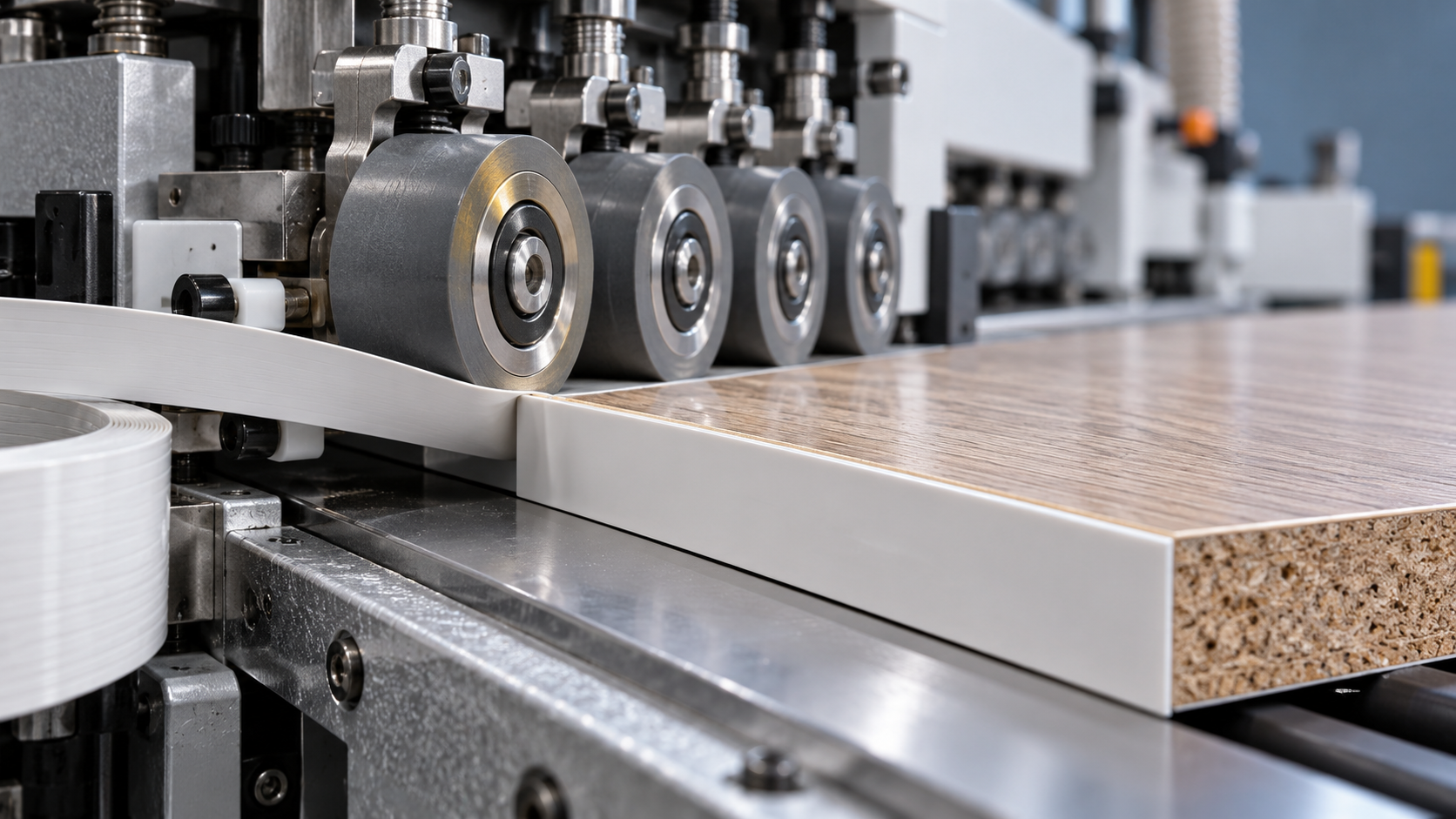
On manual or portable equipment, consistency depends heavily on work organization. Have the banding cut, the panel supported, and the pressure tools ready before adhesive application. Work within the adhesive’s specified open time. If that window is repeatedly missed, reduce the length handled in one operation or revise the method rather than trying to rescue partially set adhesive with additional pressure.
Prove the bond before a faster setting becomes the batch setting
Start with representative offcuts from the actual board and banding combination. A trial using different stock may miss the effect of a porous core, a colder panel, or a different backing treatment. Establish a satisfactory baseline, then change one operating variable at a time so the result remains interpretable.
Inspect the first trial pieces for continuous contact, consistent glue-line appearance, and secure leading and trailing ends. A neat seam is useful evidence of fit, but it does not establish bond strength. Where practical, use a sacrificial sample for a controlled peel or destructive check after the appropriate cooling or curing period, following the adhesive supplier’s assessment guidance.
The failure surface can help direct the next adjustment. Clean separation at the PVC backing suggests an interface problem worth investigating, such as contamination, incompatible surface preparation, or inadequate wetting. Loose particles attached to the adhesive may point toward a weak or poorly prepared board edge. Patchy transfer can indicate uneven application or contact. These observations guide diagnosis; no single pattern identifies every cause.
Repeat the check after the machine has reached stable production conditions and after interruptions that may affect adhesive delivery or material temperature. For reactive adhesives, distinguish the handling strength needed to continue processing from the final properties developed through curing. A panel that survives immediate trimming may still require additional time before demanding handling or service.
Record successful combinations in a short setup sheet: board type, banding specification, adhesive, machine settings, material conditions, and the checks performed. That record makes repeat work faster and gives the next operator a defensible starting point.
Use the location and timing of edge lift to narrow the cause
If the leading or trailing end lifts while the middle remains secure, examine entry support, end contact, banding alignment, and the pressure sequence. A localized defect calls for a localized inspection before changing the temperature or adhesive application across the whole panel.
If lifting extends along most of the edge, review the common bonding conditions: surface preparation, adhesive compatibility, application coverage, material temperature, and pressure contact. If defects appear mainly after a speed increase, return to the last verified setting and check which part of the process stopped keeping pace.
Lift that appears after trimming or stacking deserves a different check. Tools can pull on an insufficiently set bond, while handling can load an exposed edge before it has adequate strength. Examine trimming condition and alignment, support the panel properly, and respect the adhesive’s cooling or curing requirements. Faster bonding offers little benefit if downstream operations damage the joint.
Once the bond is repeatable, look for remaining delays around the machine: roll changes, panel presentation, replenishment, tool cleaning, and repeated setup adjustments. Removing those interruptions can increase finished output while keeping a proven operating window. Retain a higher feed speed only when representative panels pass the same bond checks and routine handling as panels made at the established setting.
Leave A Message
If you are interested in our products and want to know more details, please leave a message here, we will reply you as soon as we can.