




Reducing PVC Edge Banding Waste: Cut Planning and Machine Setup Fixes
Keeping PVC edge banding cost-effective starts with controlling the waste operators see every shift: excess trim, rejected panels, and leftover rolls that never get used. Poor cutting sequences and inconsistent machine settings turn small losses into recurring material costs. The answer is not simply to reduce every allowance. It is to separate necessary process waste from avoidable loss, then adjust the job sequence and machine settings without sacrificing finished-panel quality.
A bin full of short PVC pieces does not tell the whole story. Some may be normal end-trim offcuts; others may come from repeated threading, damaged roll ends, or rejected panels. Those losses need different fixes.
Find out where the material actually goes
For a representative production run, record the banding issued, usable banding returned, and accepted edge length. Keep rejected-panel material separate from setup scrap. Otherwise, a bonding problem can look like poor cutting efficiency, and an operator may shorten the feed allowance when the real fault is elsewhere.
Also note why each panel failed. A lifted edge, a chipped corner, and an incorrect decor match all consume banding, but only one is primarily a bonding issue. Where possible, record rework time as well. Saving a short length of PVC is not worthwhile if the adjustment creates panels that need stripping and rebonding.
Plan around compatible jobs and usable roll lengths
Group work by the complete banding specification, not just color. Width, thickness, surface finish, adhesive system, and panel requirements can all affect the setup. Two white rolls may look interchangeable on the rack but need different trimming adjustments or fail a visual match when installed together.
Within a compatible group, reserve longer rolls for long uninterrupted runs. Allocate suitable remnants to shorter batches before opening another roll. A simple remnant label should identify the specification, estimated usable length, and any damage. An unmarked partial roll is inventory that operators cannot confidently schedule.
Calculate demand from the edges being processed, rather than the full panel perimeter unless every side is receiving banding:
Required roll length = total scheduled edge length + machine-specific end allowances + threading and setup allowance.
Use the machine’s actual consumption behavior. Some equipment meters banding automatically; manual or older systems may need a different planning method. Do not apply a generic allowance from another line. Check whether the remaining roll can complete the planned sequence without an inconvenient stop.
The shortest job is not always the best destination for a remnant. Repeatedly loading tiny leftovers can consume more setup material and labor than it saves. Establish a practical minimum usable length based on your equipment and typical jobs, and separate damaged material from genuinely reusable stock.
Reduce overhang only after checking feed consistency
Excess leading and trailing overhang is an obvious target, but reducing it too aggressively leaves little tolerance for feed variation. If banding occasionally arrives late, shortening the allowance can produce an uncovered corner rather than a saving.
Before adjusting cut timing, inspect the roll path, guide alignment, feed rollers, and unwind resistance. The strip should travel without snagging, slipping, or pulling sideways. Check panel spacing against the machine requirements, too; inconsistent presentation can complicate diagnosis of feeding and cutting faults.
Once feeding is repeatable, reduce unnecessary overhang in controlled steps within the manufacturer’s limits. Check both ends across several consecutive panels, including the shortest permitted workpieces in the batch. A setting that works on one long panel is not proof of stable production.
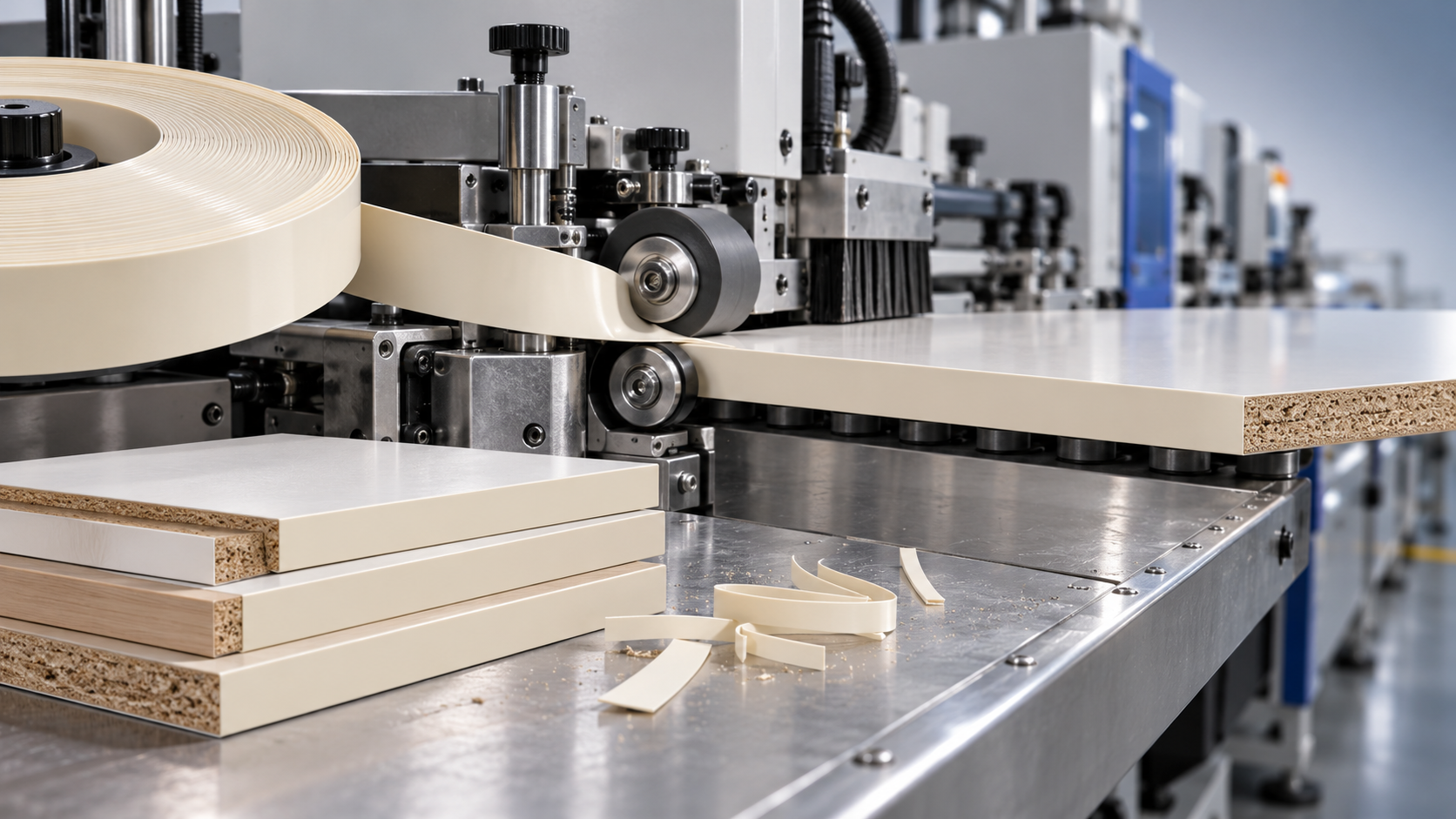
Width allowance needs the same restraint. Banding must cover panel thickness and normal process variation so the top and bottom trimmers can finish cleanly. Excess width becomes shavings, but an undersized strip cannot be corrected by trimming. Check actual panel thickness before changing the ordered banding width.
Treat bonding settings as one operating window
Feed speed, adhesive temperature, glue application, and pressure work together. Changing one while ignoring the others often moves the defect rather than removing it. Use the adhesive supplier’s processing guidance and the machine manual as the starting point; there is no universal temperature or speed suitable for every PVC strip, board, and adhesive combination.
If edges lift, check the panel edge before adding more glue. Dust, damaged substrate, unsuitable material temperature, or poor contact can undermine bonding. Verify that the application system is clean and functioning correctly. More adhesive may create squeeze-out and extra cleaning without resolving the cause.
- Intermittent bonding: inspect adhesive coverage, material condition, and pressure contact before assuming the glue quantity is too low.
- Heavy squeeze-out: check application quantity and roller settings; confirm that the substrate edge is properly prepared.
- Defects appearing after a speed change: reassess the adhesive processing window and contact conditions instead of adjusting temperature alone.
Inspect a trial panel after the appropriate cooling or curing period, using the shop’s approved quality method. A fresh edge that looks closed may still have inadequate adhesion. Keep guards in place and follow isolation procedures whenever inspection or adjustment requires access to hazardous parts.
Do not use trimming to compensate for unstable feeding
End cutters, flush trimmers, scrapers, and buffing units each need attention. Dull or contaminated tooling can leave rough cuts and marks that operators try to remove through increasingly aggressive settings. That response risks cutting into the decorative face or rounding corners inconsistently.
Confirm tool condition, alignment, and extraction before increasing cutting depth. Check a test piece under good lighting, including the underside. Change one setting at a time and record the result; otherwise, the next shift inherits a machine that produces acceptable edges without anyone knowing why.
Keep material decisions application-specific
Material economy is also relevant to Hebei Weizhong Rubber Technology, based in Xingtai and specializing in EPDM reclaimed rubber research, production, and sales since 1986. However, reclaimed-rubber formulation decisions should not be confused with PVC edge-banding setup. Likewise, an application such as a Solar Photovoltaic Panel Sealing Strip requires its own material and performance checks; suitability cannot be inferred from another polymer application.
For the next production shift, choose one recurring loss to address: excessive end offcuts, unidentified remnants, or bonding rejects. Record the starting condition, make one controlled change, and compare accepted output—not just the scrap bin. Keep the adjustment only if material use improves while edge quality remains consistent.
Leave A Message
If you are interested in our products and want to know more details, please leave a message here, we will reply you as soon as we can.