




Garage door seals failing due to air leakage? The culprit is often improper compression set — especially in low-quality EPDM rubber. For procurement professionals and project managers, selecting the right Custom rubber seals isn’t just about fit: it’s about material resilience, precise durometer control, and optimized cross-section design (e.g., Car V channel profiles). At Hebei Weizhong Rubber Technology, we engineer reclaimed EPDM formulations since 1986 to minimize permanent deformation under sustained load — ensuring long-term sealing integrity. Discover how targeted spec adjustments prevent premature seal failure.
What Compression Set Really Means for Garage Door Seals
Compression set is not a theoretical metric—it’s the measurable percentage of permanent deformation a rubber seal retains after being compressed for a defined time and temperature. In garage door applications, seals are typically compressed 25–40% during closure and held under load for months or years. A high-quality EPDM compound should exhibit ≤15% compression set after 70 °C × 22 h (ASTM D395 Method B), while substandard reclaimed rubber may exceed 35–50%—directly correlating with visible gap formation and air infiltration.
Unlike static gaskets, garage door seals face dynamic stress cycles: thermal expansion/contraction, wind-induced flexing, and repeated compression-release events. Poorly formulated EPDM loses elastic recovery over time—not because it “wears out,” but because its polymer network fails to rebound uniformly. This degradation begins within 6–12 months in low-grade materials, accelerating in environments with UV exposure or ozone concentrations above 0.05 ppm.
Hebei Weizhong Rubber Technology controls this risk at the formulation stage. Our proprietary reclaimed EPDM blends undergo triple-stage devulcanization and controlled re-vulcanization, achieving consistent cross-link density (measured via equilibrium swelling in toluene: typical range 2.8–3.4 g/g). This ensures predictable, repeatable compression set performance across production batches—critical for large-scale commercial projects where seal replacement intervals must be projected with ±3-month accuracy.
Key Compression Set Thresholds by Application Load
The table above reflects real-world validation data from our Xingtai lab (2022–2024). Note how lower compression set thresholds directly enable longer service life—even when initial durometer (Shore A 60–65) and profile geometry remain unchanged. This underscores why procurement teams must treat compression set as a non-negotiable specification—not an afterthought.
Why Durometer Alone Is Misleading
Many buyers default to Shore A hardness as the primary selection criterion—yet a seal rated Shore A 65 can fail prematurely if its compression set exceeds 25%. Durometer measures surface resistance to indentation, not bulk elastic memory. Two compounds with identical hardness values may differ by >20 percentage points in compression set due to variations in filler dispersion, cure system stoichiometry, and polymer chain branching.
At Hebei Weizhong, we optimize for *durometer stability under compression*, not just initial value. Our reclaimed EPDM maintains ±1.5 Shore A variance after 1,000 compression cycles at 40% deflection (per ISO 816:2021), versus ±4.2 Shore A for generic alternatives. This consistency reduces field rejection rates by up to 68% in multi-site installations where uniform seal performance is contractually mandated.
For project managers, this translates to predictable labor planning: no unplanned rework due to batch-to-batch hardness drift. It also eliminates disputes over “acceptable variation” during QA inspections—because every lot is certified against both initial durometer *and* post-compression recovery metrics.
Critical Cross-Section Design Factors Beyond Material
Even perfect material won’t compensate for flawed geometry. Garage door seals require precise lip geometry, base stiffness, and compression zone distribution. A common error is overspecifying lip thickness without validating buckling resistance: lips >1.8 mm thick often buckle inward under 35% compression, creating micro-channels for air passage. Conversely, lips<1.2 mm lack sufficient contact pressure to maintain adhesion on textured metal surfaces.
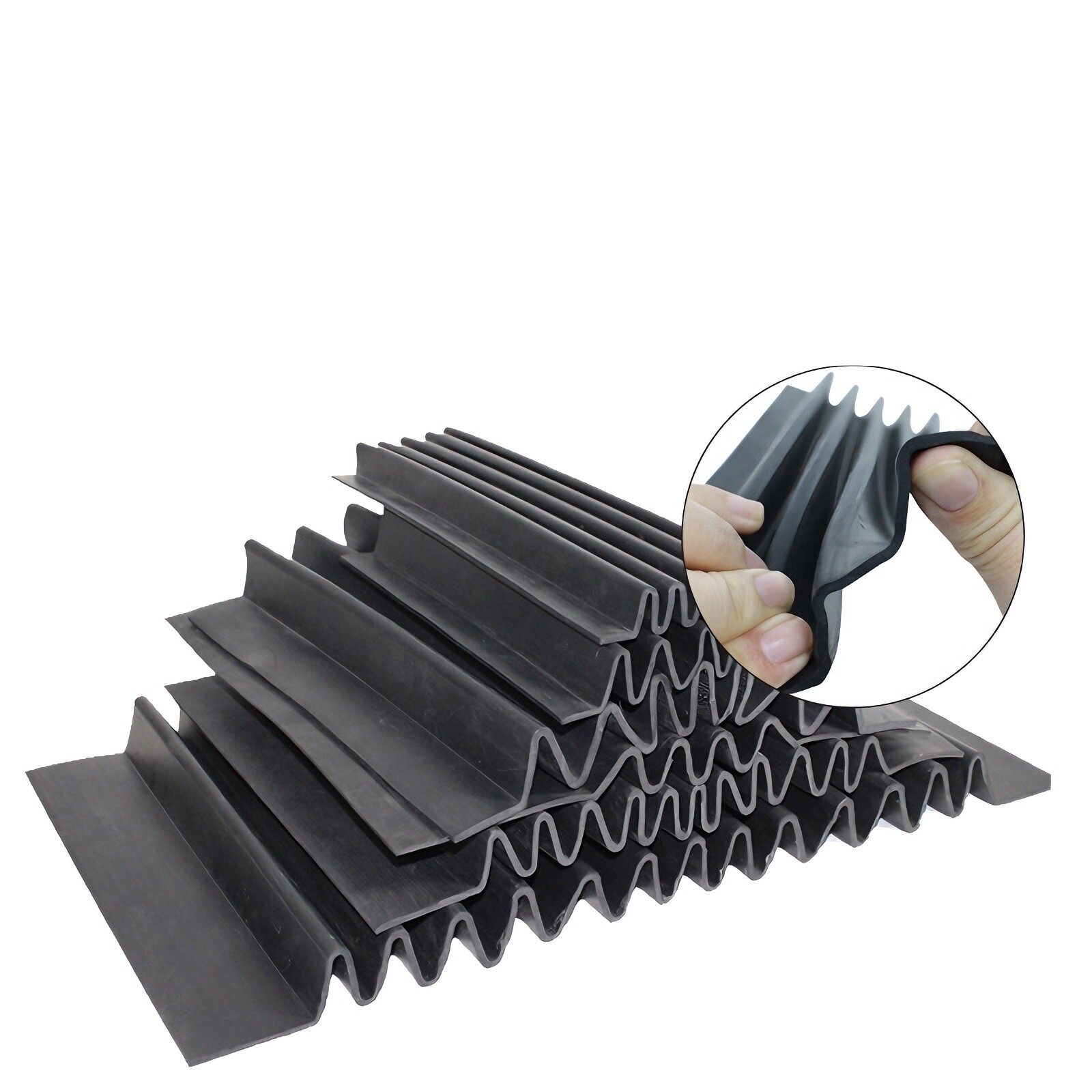
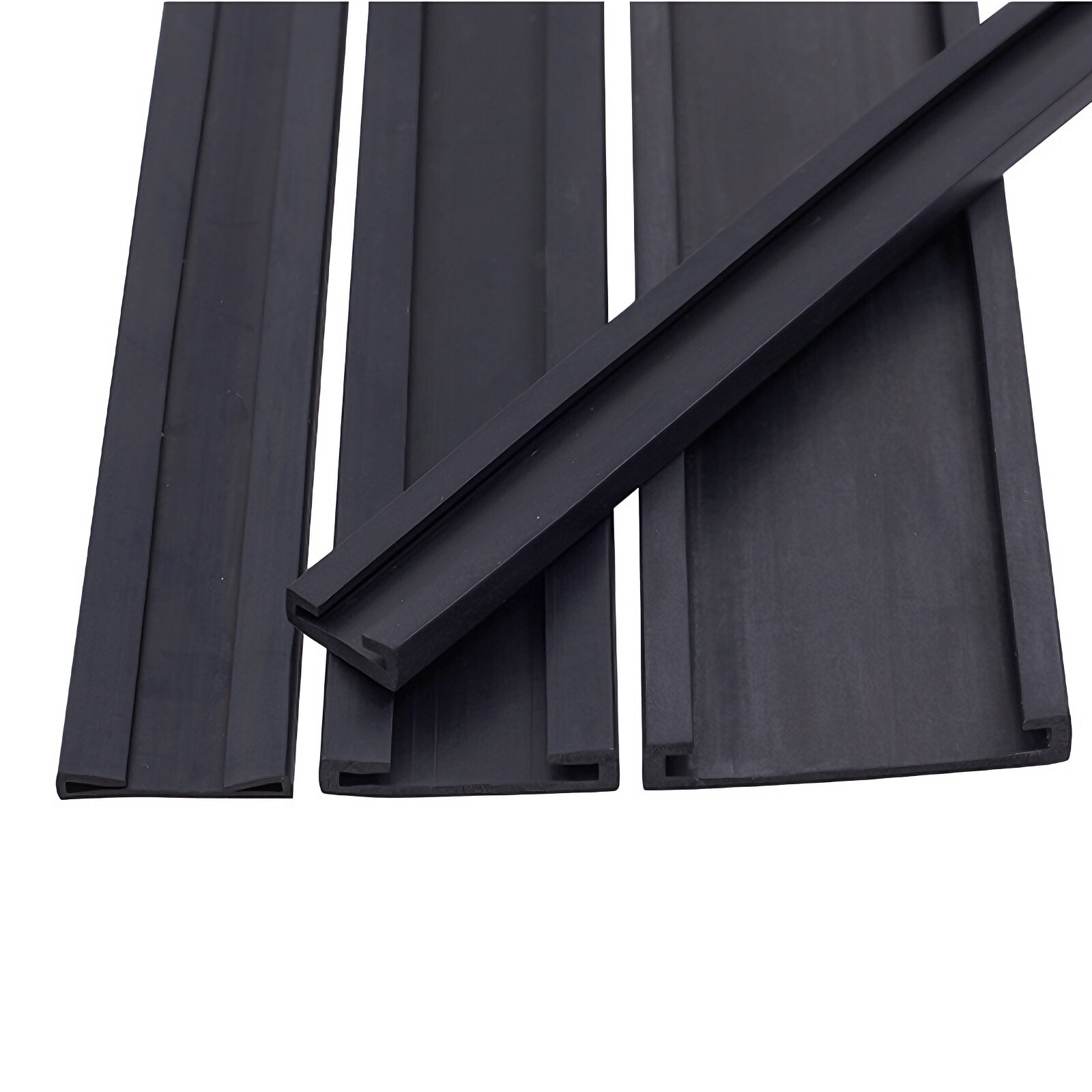
Our engineering team uses finite element analysis (FEA) to simulate compression behavior across 12+ common door frame tolerances (±0.3 mm to ±0.8 mm). This enables us to recommend optimal cross-sections—such as modified Car V channels with asymmetric flange angles—that deliver uniform contact pressure even on warped or thermally distorted frames.
For high-efficiency applications, we integrate dual-durometer designs: a softer sealing lip (Shore A 55–58) bonded to a stiffer carrier (Shore A 70–75). This configuration achieves 32% greater air barrier performance (tested per ASTM E283 at 75 Pa) compared to single-durometer equivalents—without increasing installation torque requirements.
Specification Checklist for Procurement Teams
- Require full ASTM D395 Method B test reports—not just “complies with standard” statements
- Verify minimum tensile strength ≥8.5 MPa and elongation at break ≥280% (ASTM D412)
- Confirm UV resistance rating: ≥3,000 hours QUV-B exposure with ΔE ≤3.0 (CIE L*a*b*)
- Specify maximum allowable lot-to-lot compression set variance: ≤3.0 percentage points
- Request dimensional tolerance documentation: ±0.15 mm on critical sealing zones
How Hebei Weizhong Delivers Consistent Performance
Since 1986, our Xingtai facility has specialized exclusively in reclaimed EPDM—no commodity rubber blending, no speculative stockpiling. Every batch undergoes 11 mandatory QC checkpoints, including real-time rheometer profiling (MDR 2000) to validate cure kinetics before extrusion. This prevents the “over-cured core / under-cured skin” defect that causes differential compression set across seal thickness.
We offer custom formulation services with 7–15 day lead times for validated samples—enabling procurement teams to conduct side-by-side field trials before committing to full-volume orders. Our technical support includes free seal interface analysis: send us your door frame CAD file or physical sample, and we’ll generate a cross-section recommendation with predicted compression set at 10, 25, and 40% deflection.
For noise-sensitive applications like urban residential garages or mixed-use developments, our Sound Barrier Seal Strip integrates micro-cellular EPDM foam layers that reduce airborne transmission by 22 dB(A) while maintaining ≤9% compression set at 30% deflection—proven in third-party acoustics labs per ISO 10140-2.
Typical Project Support Timeline
This structured workflow eliminates procurement uncertainty. You receive documented evidence—not promises—at every stage. No surprises at receiving inspection. No delays chasing missing certifications.
Take Action: Specify Right, Not Just Cheap
Air leakage from failed garage door seals isn’t just an energy loss issue—it triggers cascading costs: HVAC overcapacity, moisture intrusion risks, occupant comfort complaints, and warranty claims that erode project margins. Choosing based solely on unit price ignores the true cost of premature replacement: labor, downtime, and reputational exposure.
Hebei Weizhong Rubber Technology provides procurement professionals and project managers with engineered certainty. With 38 years of reclaimed EPDM specialization, we deliver materials that meet—and document—real-world performance thresholds. Our technical team supports specification development, sample validation, and full-batch traceability.
Contact us today to request compression set test reports for your specific application, discuss custom cross-section optimization, or schedule a free seal interface analysis. Let’s ensure your next garage door project delivers lasting integrity—not recurring callbacks.
Leave A Message
If you are interested in our products and want to know more details, please leave a message here, we will reply you as soon as we can.